Posted by Dr. Miguel Fernández Calderón: 28/04/2023
Pregnancy, being overweight and poor posture are some of the situations that can trigger the separation of the abdominal muscles. This condition is known as rectus diastasis and it is not only an aesthetic problem, but a functional one. At Sculpture Clinic we explain the surgical and non-surgical solutions to this problem.
What is rectus diastasis?
The separation of the rectus abdominis muscles is known as abdominal diastasis. This condition weakens the abdominal wall and causes a bulge to appear in this area when the person is standing or performing movements that press on the abdomen.
The rectus abdominis are two muscles located in the centre of the body and joined by the linea alba. Their function, together with the rest of the abdominal muscles, is to support the body and enable movement. They are also responsible for protecting the internal organs.
The separation of these muscles affects appearance because the abdomen looks bigger. But this is not the only problem, since it can cause urinary incontinence, prolapse, and back and pelvic pain.
Types according to location and severity
According to the area affected by the separation of the muscles, rectus diastasis can be supraumbilical, when it is above the navel.
It can also appear below the navel. In this case we are talking about infraumbilical diastasis. Finally, it is called total diastasis if it affects the whole midline.
Another way of classifying diastasis is by its severity, which corresponds to the gap between the rectus abdominis muscles.
If the distance between the rectus muscles is between one and two centimetres, it is considered mild diastasis. A separation of between two and five centimetres is moderate. But when the separation of the muscles exceeds five centimetres, we are looking at a severe case.
It is important to understand the type of diastasis in order to determine the correct treatment.
Causes and risk factors
Abdominal diastasis is related to increased intra-abdominal pressure, which causes the muscles to separate. This condition can affect both men and women and can be related to pregnancy, obesity and other factors.
Pregnancy and the postpartum period
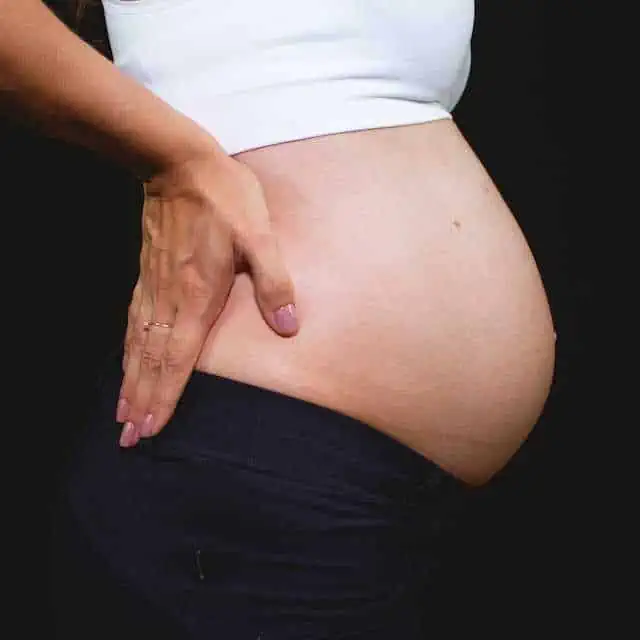
Pregnancy is one of the most common causes, since the abdomen expands to make room for the growing foetus. That pressure on the abdomen can lead to the separation of the muscles.
On the other hand, pregnancy hormones, such as relaxin, also contribute to loosening the connective tissues, making diastasis easier. In multiple pregnancies, the risk is greater.
Pregnancy and childbirth can bring changes to a woman’s body such as abdominal diastasis and changes in the vaginal labia. The latter can be corrected through labiaplasty.
Obesity and weight changes
People with obesity are also prone to rectus diastasis. This is because significant weight fluctuations weaken the abdominal muscles.
Likewise, the pressure exerted by excess abdominal fat can affect the elasticity of the connective tissues.
Unsuitable exercise and excessive physical effort
There are other risk factors that can cause this condition. Among them is excessive exercise involving repetitive bending or twisting movements of the trunk.
Other risk factors related to diastasis are a sedentary lifestyle and intestinal inflammation. It can also appear as a consequence of certain surgery.
Symptoms and diagnosis
Rectus diastasis does not always present obvious symptoms. Some people may even have it without knowing. However, there are cases where it can cause discomfort, as well as the associated aesthetic problems.
Visible signs and associated discomfort
People with rectus diastasis usually have a bulge along the midline of the abdomen. This protrusion is more obvious when the abdominal muscles are tensed, for example when getting out of bed or exercising.
Besides the bulge, other problems that can arise are lower back pain, difficulty carrying out physical activity, poor posture or urinary incontinence.
Self-assessment and clinical tests
Abdominal diastasis is diagnosed through a physical examination that can be carried out by a physiotherapist. Ultrasound scans are also requested, which show whether there is separation between the muscles and determine exactly how many centimetres it is.
A person may suspect they have this condition when their abdomen is slack and bulging, and it is possible to carry out a self-assessment.
To do so, lie face up on a firm surface, bend your knees so your feet rest on the floor and do a sit-up. While doing this movement you should feel the area above the navel with your fingertips. This will tell you whether there is a separation of the muscles.
After the self-examination you need to see a specialist for a professional diagnosis and treatment.
Non-surgical solutions
If the separation between the rectus muscles is less than two centimetres it can be treated with exercise and physiotherapy.

Specific exercises for treating rectus diastasis
The physiotherapist is responsible for guiding the patient on the core strengthening exercises that need to be done. In this case traditional sit-ups are not performed, so it is important to follow the therapist’s instructions.
During the therapy, hypopressive abdominal exercises are performed and the transverse abdominal muscle is worked. Pelvic floor exercises are also recommended.
Do not forget that it is a specialist who will tell you which stretching and mobility exercises you can do, as well as the strengthening ones.
Physiotherapy and rehabilitation programmes
As we explained, you need to see a physiotherapist to get a diagnosis and the corresponding treatment. If the rectus diastasis is mild it can be resolved through a programme tailored to the patient’s condition.
On the other hand, it is recommended to go through this process even before turning to surgery to correct the diastasis.
Results with these treatments can be seen within a year, or even longer, and depend on each patient. The therapy should be accompanied by a good diet.
Using support garments and abdominal bands: pros and cons
Support garments act as a complement to the treatment of abdominal diastasis and help avoid discomfort. However, on their own they do not solve the problem. In addition, you cannot use just any type of garment. It will be the specialist who says what type to wear and for how long.
The advantages of support garments are:
- They prevent back pain.
- They stop the organs moving out of place.
- They help compress the abdomen.
As for the disadvantages:
- You cannot use just any garment.
- You have to avoid overusing them.
Surgical solutions
In cases where rectus diastasis is severe, surgery is used to put the muscles back in place. Surgical treatment is recommended when the separation is greater than three centimetres and when physiotherapy has not worked.
Ideal candidates for rectus diastasis surgery
Surgery is not needed in every case to correct rectus diastasis. Surgery is used in cases where the separation is very severe.
Other factors are also taken into account, such as whether the patient suffers from back pain and other discomfort.
There are occasions when the diastasis is associated with a hernia, which may be umbilical, inguinal or abdominal. In these cases surgery is also used.
Types of surgery for treating rectus diastasis
What surgical treatment seeks to do is repair the midline with sutures. This is how the muscles are returned to their place.
Rectus plication
Plication of the rectus abdominis consists of joining the muscles with sutures. This is done through an incision made near the navel. According to the patient’s condition, a mesh may or may not be used to help strengthen the area.
It can also be done endoscopically, which is less invasive surgery.
Abdominoplasty
Rectus diastasis is also corrected through an abdominoplasty when the patient has excess skin on the abdomen.
This surgery is done with an incision in the lower abdomen, through which the surgeon has access to the muscles. They will bring both muscles into place and perform the plication. Likewise, they may or may not place a mesh.
After joining the muscles they go on to stretch the skin and cut away the excess. When performing the abdominoplasty the navel is also repositioned.
Take a look at the Sculpture Clinic abdominoplasty treatment if you think this is the solution to your problem.
It is possible to combine the abdominoplasty with liposuction to remove fat and improve body contour.
Risks and complications of rectus diastasis surgery
All operations have risks and surgery to correct rectus diastasis is no exception. These include haematomas, seromas, infections, pain or problems related to the anaesthetic.
Choosing the right surgeon and following the instructions given before and after the operation helps reduce the risks.
Post-operative recovery: tips and care
During recovery the patient must follow the surgeon’s instructions to the letter. Recovery can last four weeks, during which the patient must rest physically. This time allows the skin and muscles to settle.
In the first week they will need to take the medication the doctor prescribes to avoid infection and control discomfort. They will probably feel some pain.
They must sleep on their back, with the back raised, to avoid stretching the abdomen completely.
The patient will return to their activities little by little, but must not make any great physical effort.
After the operation they will need to wear a support garment for abdominal diastasis. At first all day, and then as the surgeon indicates.
Long-term results of surgical and non-surgical solutions
Correcting rectus diastasis will result in a better appearance for the patient. Body contour will improve, since the muscles are joined back together and strengthened. Which will also result in better self-esteem.
If the correction is done through an abdominoplasty, the excess skin will also be removed, which means a profound change in the patient’s appearance.
But rectus diastasis is not only an aesthetic problem, it is a functional one. So after surgery, the discomfort, back pain, incontinence and any other symptoms the patient had are expected to disappear.
Preventing rectus diastasis
- Do exercises to strengthen the transverse abdominal muscle.
- Always maintain good posture while standing or sitting.
- When sitting you can put a cushion behind your back to improve your position.
- Avoid a sedentary lifestyle and exercise; however, physical activity must be controlled.
- Do not carry weights or very heavy objects, especially during pregnancy.
Conclusions: choosing the right solution for each case
Abdominal diastasis can arise for different reasons and to different degrees of severity. It is a condition that must be diagnosed and treated by a specialist.
According to the patient’s situation it will be determined whether it can be resolved through surgical treatment, such as an abdominoplasty, or through physiotherapy. Listen to the specialist and follow their instructions.
If you suspect you have rectus diastasis, go for a check-up so you can start treatment as soon as possible.