Posted by Dr. Miguel Fernández Calderón: 22/06/2023
When the shape of your body is affected after pregnancy, and you do not feel comfortable with the way your abdomen looks, you have very likely thought about abdominoplasty after pregnancy as a way of getting your former appearance back. If that is your case, read on: here we explain when to have it and how it affects breastfeeding.
Things to consider before an abdominoplasty after pregnancy
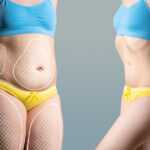
Abdominoplasty is surgery that removes excess fat and hanging skin from the abdomen, a condition that is very common in women after pregnancy because of weight gain, the separation of the abdominal muscles and the stretching of the skin as the belly grows.
After having your baby, there are some things you need to consider before deciding to have an abdominoplasty in Madrid.
Whether or not you are breastfeeding
During breastfeeding, your hormone levels are altered and these hormonal changes can affect body weight and recovery if you undergo a surgical procedure.
In addition, the medication used during surgery and for recovery can reach the baby through breast milk and put them at risk.
Because of the above, the recommendation is to wait three months after you stop breastfeeding so that your body and your weight stabilise and so that recovery is quicker and more straightforward.
Many women who want abdominal surgery also hope to improve the shape of their breasts with a mommy makeover. And for that it is necessary to wait until you have finished breastfeeding your baby and to give your breasts time to settle into their final shape, and only then make the decision about breast surgery.
Stabilised weight
Pregnancy produces both internal and external changes in a woman’s body, so it is important to wait for the body to return to normal, regardless of whether the birth was natural or by caesarean section. Remember that during gestation women gain weight, retain fluid and store fatty tissue.
Even after giving birth, a woman’s weight can fluctuate. And that is why we say it is necessary to wait for the weight to stabilise, for you to be at a stable weight and for the hormones to balance out, before deciding to have an abdominoplasty.
Reaching an appropriate weight can take a different amount of time for each person, but you may need more than six months after giving birth.
Undergoing an abdominoplasty requires the patient to have reached a weight close to her ideal, because otherwise, if she gains weight after surgery the fat will form again, and if she loses weight the skin will end up sagging once more.
Not planning future pregnancies
This point has nothing to do with a woman’s ability or capacity to have more children. Rather, if you become pregnant again after an abdominoplasty, you will gain weight, your skin will stretch and the connection between the abdominal muscles will stretch too. With all of that, the results of the surgery will be compromised.
An abdominoplasty involves risks, since it is major surgery. As well as being expensive and having a complex recovery in the first few days. So going through all of that and achieving the figure of your dreams, only to lose it afterwards, is not the best option.
If you were to become pregnant, you need to be clear that this does not mean a risk to your health, nor will it affect your baby; it is simply about the possibility of losing the results. Likewise, it is very likely that after motherhood you will want another abdominal reduction procedure, with everything that entails.
Assessment of rectus diastasis
The surgeon must assess the degree of separation of the abdominal muscles (rectus diastasis), a condition that frequently occurs after pregnancy and which an abdominoplasty can correct.
General state of health
Checking the patient’s current state of health is essential before deciding to undergo surgery. To have an abdominoplasty after pregnancy you need to be in good general health and not have habits such as smoking, since this can affect recovery and increases the risk of complications from the surgery.
Choosing the type of abdominoplasty
According to the patient’s current condition and her expectations of the results, the surgeon will say whether she needs a full abdominoplasty or a mini abdominoplasty.

When should you have an abdominoplasty after a pregnancy?
Broadly speaking, you could say that the body recovers completely from a pregnancy within six months to a year. In that time your body will have healed, your weight will have stabilised and your hormone levels will have returned to normal. And by that point you will be able to see the surgeon for a first appointment.
If you are still breastfeeding, the recommendation is the one we gave earlier: it is better to wait at least three months after you stop breastfeeding your child before an abdominoplasty after pregnancy.
After pregnancy it is normal to feel uncomfortable with the way our body looks, and therefore to feel anxious about wanting your figure back. But there is no need to despair; it is better to wait patiently, for as many months as it takes, to be sure that you are ready for surgery and that it is the right moment for the best possible results.
If you think you need an abdominoplasty but still have doubts about the procedure, you can book an assessment with our specialists. At the appointment they will carry out a physical examination to confirm that this surgery is right for you and whether you can achieve realistic results.
What preparation do you need for an abdominoplasty?
Proper preparation before surgery has a great influence on recovery and on the results, hence the importance of taking care to do it properly.
The steps before undergoing an abdominoplasty after pregnancy involve:
- Not smoking, since this affects healing and tissue repair. It also increases the chance of infection.
- Make sure you organise your recovery, so that you have someone to support you in caring for your baby and for yourself. Because remember that the first weeks of recovery require attention and support so that you do not make unnecessary effort. You will find it difficult to walk and you will not be able to pick up your baby
- Make sure you are at or very close to your ideal weight.
The abdominoplasty surgical process
Surgical technique and types of approach
The process of an abdominoplasty after pregnancy starts with a horizontal incision along the lower part of the abdomen, and depending on the type of abdominal surgery (mini or full) the size of the cut varies, being small in the mini and running from hip to hip in the full procedure.
Next comes repairing the abdominal muscles and removing the excess skin, to improve the firmness of the abdomen. At the end the navel is repositioned in its new place and the incisions are closed.
Length of the operation and anaesthetic
A general anaesthetic is usually used in an abdominoplasty. And depending on the type of technique, the time can vary. Full abdominal surgery can take between two and four hours, while a mini abdominoplasty can take one or two hours.
Hospital stay and discharge
The patient will need a hospital stay of one to three days, depending on the type of abdominoplasty. After being discharged the patient needs several weeks for an optimal recovery.
There are several aspects to bear in mind about abdominoplasty surgery after pregnancy, such as when to have it and how it affects breastfeeding. You should remember that abdominal reduction surgery is not designed for losing weight. And the candidates are those who are close to their ideal weight but who have been left with hanging skin and excess fat in that area.