Posted by Dr. Miguel Fernández Calderón: 11/07/2023
A rhinoplasty is very common surgery that allows those who are not happy with the way this part of their face looks to achieve a more pleasing, harmonious and balanced appearance. If you are thinking about having one, we want to explain everything you need to know before nose surgery so that you are prepared.
What is rhinoplasty?
A rhinoplasty is a surgical procedure whose aim is to give the nose a new shape. For some patients nose surgery is a way of breathing better; it is not for aesthetic purposes but for health.
The importance of rhinoplasty in facial harmony
The nose is the part of the face at the centre, and the one that stands out most. So when you look at someone’s face, that feature has a significant effect on first impressions.
If the shape and structure of the nose is not properly proportioned to the rest of the face, the face does not look harmonious and there is no balance. Likewise, if the patient wants a more radical change, they can combine the rhinoplasty with a bichectomy or a chin implant.
Reasons to consider a rhinoplasty
The reasons why people seek a rhinoplasty are varied, and they can be divided into reasons for improving appearance and reasons for improving health.
Correcting aesthetic problems
Aesthetic problems are one of the main reasons why patients come in for a rhinoplasty.
- If you are not happy with the size of your nose, ultrasonic rhinoplasty may be the solution. If it is very large the surgeon may recommend a reduction rhinoplasty, and where it is very small, an augmentation.
- There are also those who have a crooked nose, from natural causes or from accidents or injuries. A refinement rhinoplasty can put this right and improve the angle of the nose.
- For those who have already had a rhinoplasty and feel it did not turn out well or are not happy with the results, a revision rhinoplasty is available. This can put right what did not go so well the first time.
Correcting functional problems
Rhinoplasty also serves to solve functional problems. In this case, nose surgery makes for a better quality of life.
For example, a deviated nasal septum can cause difficulty breathing during sleep, as well as heavy snoring. In these cases, rhinoplasty can improve the flow of oxygen through the nostrils.
Interested in bringing more harmony to your face with a bichectomy in Madrid? Get in touch with the specialists at Sculpture Clinic.
Things to consider before surgery
Once you have made the decision to undergo surgery such as a rhinoplasty, there are certain considerations you need to bear in mind that are essential for a good result.
Choosing the surgeon and the clinic
Before choosing the right surgeon for a rhinoplasty it is important to make sure, first of all, that they are a certified doctor, qualified for this type of operation, and experienced.
Also look at their surgical history, through their social media, by visiting the clinic where they operate, or through recommendations from other patients.
At the same time you must make sure that the clinic has all the necessary permits and operates legally.
Realistic, personalised expectations
Having chosen the surgeon, you need to talk to them about your expectations for the surgery. The specialist will be the one to tell you whether what you want is possible or not, and what results you can realistically expect.
Remember that this is about improving the appearance of the existing nose, not about finding perfection, and nor can you ask to have a nose exactly like someone else’s.
Pre-operative preparation
As with all surgery, the doctor will recommend that a month beforehand you stop smoking, drinking alcohol and taking certain medications, and you may even need to avoid coffee.
Another suggestion is to organise everything at home for the first days of recovery. A comfortable environment where you have all the supplies you need (medication, food and entertainment) is what you want.
Learn a few relaxation techniques and arrange for someone to take you home after surgery.
Finally, remember to ask your surgeon about the pre- and post-operative care you need to take.
Types of rhinoplasty
There are different techniques that each surgeon uses in their own way when performing a rhinoplasty. But in general we can talk about three main types.
Closed rhinoplasty
This type of surgery is characterised by incisions made inside the nose, without affecting the skin, so it leaves no visible scars on the outside.
It has the advantage of causing less swelling and works well for improving small imperfections; however, during the procedure the surgeon has little visibility of the bone, cartilage and tissues.
Open rhinoplasty
In an open rhinoplasty a cut is made in the lower part of the nose, between the nostrils. The skin is then lifted, allowing the surgeon access to the internal structure of the nose; they make the corrections and then put the skin back in place and close it with sutures, leaving a very small scar.
Ultrasonic rhinoplasty
The ultrasonic technique is the newest and most advanced used for nose surgery. It works thanks to a device that emits high-frequency sound waves, which move small piezoelectric inserts for cutting and shaving without affecting the soft tissue. This is how the work is carried out with maximum precision and safety.
The rhinoplasty process
To understand what a rhinoplasty involves, you need to know how the surgical procedure is carried out.
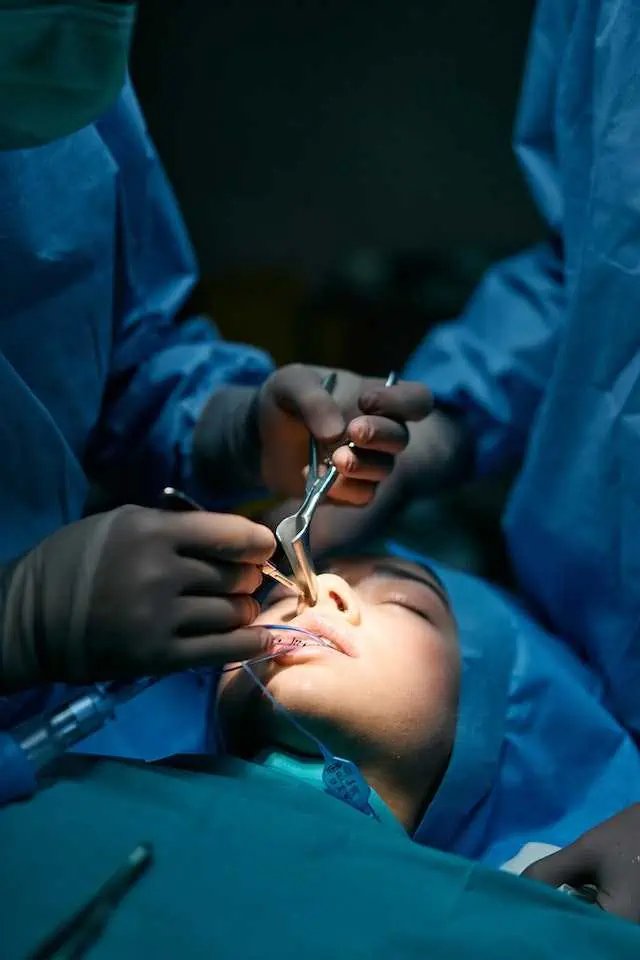
The surgical procedure
A rhinoplasty can take, on average, between one and three hours. Depending on the patient and what the surgeon considers appropriate, it may require local or general anaesthetic. To begin the surgery, the surgeon will choose the technique they consider most suitable for the patient.
In the case of an open rhinoplasty, they will start by making the incision. If the patient has polyps the doctor will remove them, and if necessary they will take cartilage from other parts of the body to use as implants.
At the end of the reconstruction the doctor will put the tissue and skin back in place. They will then close the incision
Recovery and post-operative care
The patient will stay in the recovery room until they wake up. Their head will be placed higher than their chest, to reduce bleeding and swelling.
The internal dressings can be removed one to seven days after the operation, and if you have a splint, you will wear it for a week.
Among the care you need to take after nose surgery, we can recommend:
- Avoiding physical activity.
- Taking baths rather than showers so that water does not run onto your face.
- Not blowing your nose.
- If you cough or sneeze, doing so with your mouth open.
- Brushing your teeth carefully so as not to disturb the area around the nose.
- Avoiding clothing that has to be pulled over your head; go for shirts with buttons or a zip.
It is important to follow the surgeon’s instructions for a more effective recovery.
Results and benefits of rhinoplasty
Among the benefits gained after a rhinoplasty, the patient can see their face looking more harmonious. For those who do it for health reasons, their condition improves.
- Aesthetic improvement: The result of a rhinoplasty performed purely for aesthetic reasons is a more pleasing facial appearance. This type of surgery can help you achieve a more defined nose, a narrower bridge, remove humps and reshape the nose and/or the nostrils.
- Functional improvement: A functional improvement is achieved after a rhinoplasty when the surgery is performed in order to improve a condition that prevents the patient from breathing properly. And, as a result, the patient can improve their quality of life.
- Impact on self-esteem and quality of life: A patient who undergoes a cosmetic rhinoplasty improves their appearance, which improves their self-esteem and confidence and reduces anxiety. People who are unhappy with their nose can end up with low self-esteem and even be victims of bullying. For those who do it for functional reasons, rhinoplasty helps improve breathing and with it the quality of sleep.
Frequently asked questions about rhinoplasty
How much does a rhinoplasty cost?
The price of a rhinoplasty can depend on the technique the surgeon uses. However, the cost can range from €2,500 to €10,000.
When is the best time for a rhinoplasty?
If you are looking for the best time to have a rhinoplasty, we should say that in summer you have to be careful with the sun, the heat and allergies, and you must avoid swimming. In winter you need to take care that your skin does not dry out and be careful not to catch a cold.
That said, the best time to have this procedure is whatever suits each person best, along with their lifestyle, work and family.
How long does recovery from a rhinoplasty take?
Recovery time from a rhinoplasty can be approximately six weeks. Between seven and fourteen days afterwards you can go back to everyday activities, such as work or classes. Between weeks three and six you can take up physical activity again with your doctor’s authorisation.
Between 3 and 6 months the numbness around the nose disappears, and by a year the healing process should be complete. Remember that this can vary from patient to patient.
We hope we have cleared up some questions about rhinoplasty; this is what you need to know before nose surgery. If you are interested in this procedure, book an appointment for an assessment with our surgeons.