Posted by Dr. Miguel Fernández Calderón: 11/07/2022
How long does recovery from an abdominoplasty take?
Blog of Aesthetic News, Tips and Care
Many of you want to have this surgery, because of its excellent results on the abdomen. Even so, you are concerned about knowing when you will be able to get back to normal life afterwards. Below, we explain the whole process of recovery from an abdominoplasty.
What factors influence recovery from an abdominoplasty?
After two months, most patients are living an almost normal life. But recovery time from an abdominoplasty varies. It depends on many factors, such as age, the patient’s state of health, the technique used and the aftercare, among others.
Age, general health and other conditions
Younger patients have better skin elasticity than older ones. In addition, the capacity to recover and heal is also greater in the first group. Older patients have a higher risk of complications.
There are certain health conditions that also affect recovery. For example, clotting problems and autoimmune conditions.
In diabetic patients healing is slower. If there is obesity or cardiovascular disease, there is a greater risk of complications.
Finally, the patient’s general state of health has a big impact on their recovery. This includes their nutrition, hydration, prior physical condition and a healthy immune system.
Type of technique
There are different surgical techniques for performing an abdominoplasty and each one has different implications.
The mini abdominoplasty is less invasive and the scars are smaller. Therefore, recovery is quicker than with a classic abdominoplasty.
Lipoabdominoplasty combines liposuction with abdominoplasty. It has more complex scarring and its recovery is moderate. Finally, belt lipectomy is a more specialised technique of greater surgical complexity, so its recovery takes longer.
Aftercare and following instructions
Achieving a proper recovery from an abdominoplasty is possible if you know what to do at each stage. You need to attend every check-up your surgeon arranges.
Supervision by a specialist is key to success. Before surgery, they will tell you how many weeks off you will need. After the operation, they will tell you which activities you can and cannot do.
Following your surgeon’s instructions is essential for avoiding complications. Rushing recovery can cause the sutures to open.
Conversely, a very slow recovery can encourage fluid to build up (seromas) and clots to form. Proper follow-up avoids many problems.
Week by week, what recovery from an abdominoplasty is like
- Day 0: you spend the night in hospital to ensure your safety and pain control. You are fitted with a compression garment and have two drains.
- Day 1: You can go home (with the drains) if you are walking and eating properly, and if the pain is well controlled. Before you leave, we dress the wounds and refit the garment.
- Week 1: You can walk around the house for a few minutes, several times a day. The garment is worn 23 hours a day; it can be taken off for an hour to check the condition of the skin and take a break from the compression. If you feel well, you can go out, accompanied, for short walks. At the end of this week you have your first check-up at the clinic. If possible, we remove the drains.
- Week 2: You can increase the length of your walks. At the end of the week, you can go back to work, if your job does not require physical effort. If the drains have been removed, there is no problem showering your whole body. Midway through this week, you have another check-up at the clinic. If everything is fine, you can start your massage sessions. We also remove most of the stitches.
- Weeks 3 and 4: you start to feel better and better. It is important to keep walking regularly. You can do activities such as using an exercise bike. You carry on wearing the garment 23 hours a day. At the end of the month, most patients are living an almost normal life. You can start to walk more upright, and even stretch the abdomen a little. But you cannot make intense physical effort or carry much weight.
- Check-up in week 4 at the clinic. If everything is fine, you will no longer need to wear the garment all day.
- Second month: Most patients go back to work. The garment is worn about 12 hours a day. You can and should exercise, but NO sit-ups. Train arms, legs, do cardio, stretching… but calmly and without overdoing it. You can drive again.
- Third month: Another medical check-up. Normal life. You can start doing sit-ups at the end of the third month, NOT before. You can say goodbye to the garment.
How long does it take for the abdomen to go down after an abdominoplasty?
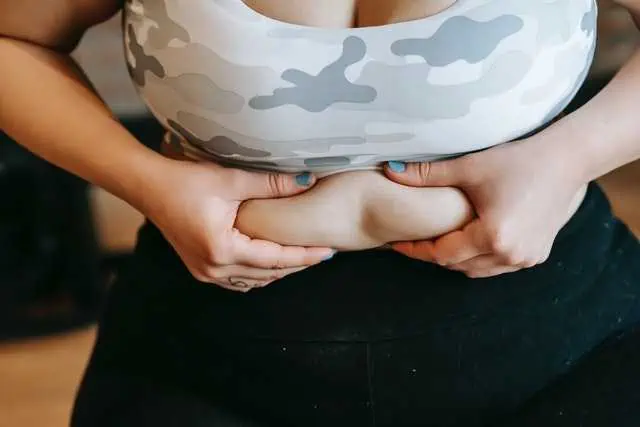
During the first 3 months, the abdomen will look somewhat swollen. From the sixth to eighth month the swelling will have practically disappeared. The skin will adapt to its new contour, creating the result you were hoping for.
When can I walk normally after an abdominoplasty?
In the first weeks after surgery, the abdomen must be relaxed. This avoids complications and lets the scar heal as it should. That is why, for the first 3 weeks, we recommend walking with your waist slightly bent.
From around the fourth week you will be able to walk completely upright.
How long does the pain from an abdominoplasty last?
In recovery from an abdominoplasty, the discomfort is usually moderate and lasts about a week.
To control the pain, we will prescribe several painkillers. As the days pass, you will need far less medication.
During the first months, it is normal to feel strange sensations or mild discomfort in the operated area, without this meaning anything dangerous.
Since the first week is the most painful, we make technology such as the pain pump available to you. This is a device you can take home with you for the first 5 days after surgery. This pump delivers pain relief intravenously, greatly improving how you feel.
Key aftercare and recommendations
It is essential to follow the aftercare your surgeon recommends in order to have a proper recovery. The basic recommendations are as follows:
Wearing a compression garment: how long and how
After an abdominoplasty you must wear a compression garment. This supports the tissues and helps reduce swelling. It also contributes to improving body contour.
The surgeon will decide how long it should be worn. Generally, it is used for a month and for the first two weeks it will be 24 hours a day.
Hygiene, dressings and cleaning the wound
A good recovery also depends on following the cleaning protocol the doctor sets out. To keep the wound clean it is washed with warm water and a neutral soap, and dried with a clean towel without rubbing.
The specialist will say when to change the dressings and which antiseptics to apply. Make sure you keep the area dry and consult your surgeon if there are signs of infection.
Managing pain: analgesia, rest, warning signs
Painkillers and anti-inflammatories will be prescribed to control pain and discomfort. During the first weeks you must sleep on your back, semi-upright. Short, low-intensity walks can be taken, but high-impact exercise must be avoided until the surgeon says otherwise.
Some warning signs to watch out for are: intense pain that is not under control, asymmetrical pain or pain that progressively increases, and a burning sensation.
How does the body look after an abdominoplasty?
Abdominoplasty, in expert hands, produces spectacular results. The main advantage over other techniques is that the hanging skin on the abdomen disappears. Removing that loose skin will give you greater mobility, less sweating and fewer skin infections.
Correcting rectus diastasis will strengthen your abdominal wall, creating a slimmer waist with no bulges. You will gain strength and flexibility in the abdomen, as well as better posture.
The love handles around the waist will also be reduced, especially if we combine the abdominoplasty with a liposculpture. These excellent benefits require a lot of patience on your part, since they cannot be fully appreciated until the 6th-8th month.
For the first two weeks it is normal to see bruising on the body. Throughout the first month, swelling in the abdomen is considerable. This swelling may make you doubt the final result, but it is simply a normal phase of recovery.
The scars can give trouble during the first days and may even open (dehiscence). For the first months they may be raised or red. Rest assured, after a year their appearance improves a great deal.
Knowing how long recovery from an abdominoplasty takes will help you understand that it is a process requiring care, and with the right attention it will pass without problems.


The Sculpture Clinic Team
Together we are stronger

Dr. Miguel Fernández Calderón
Plastic, reconstructive and aesthetic surgeon

Dr. Irene Otero
Anaesthetist

Dr. Juan Godoy
Plastic, reconstructive and aesthetic surgeon

Dr. Estefanía Alonso
Plastic, reconstructive and aesthetic surgeon