Posted by Dr. Miguel Fernández Calderón: 20/10/2023
A combined procedure of rhinoplasty and otoplasty performed simultaneously is a very common desire among our patients. The face is a determining factor in our attractiveness, and refining both areas is quite straightforward and effective. The question is, can both procedures be performed at the same time? What are the pros and cons? We’ll explain it all below.
Criteria to Consider for Combined Surgeries
One of the reasons many patients don’t undergo multiple plastic surgery procedures is that they must go through recovery several times. However, today it is possible to perform more than one operation in a single procedure. Through an initial diagnosis, the operations in which the patient is interested are studied according to several criteria.
- The proximity of the areas: It’s better when the parts are close together, such as different areas of the face or the abdomen and breasts.
- The degree of difficulty: which is determined by the number of simpler operations that can be performed and the complexity of the most difficult operation.
- The recommended time in the operating room: There’s nothing wrong with a patient spending three hours in the operating room, but it’s recommended that patients not exceed five hours. This type of procedure is performed on both men and women, as long as the person is in good health.
What Do Both Treatments Involve?
Before explaining the advantages and disadvantages of having rhinoplasty and otoplasty at the same time in Madrid, it’s best to understand well what each procedure involves. With all the information at hand, we’ll be able to make a better decision.
Rhinoplasty
The rhinoplasty, also known as nose reshaping, is an aesthetic surgical procedure to change the size and shape of the nose. We use this technique for two reasons: first, because we want our nose to look better; second, because we want to improve its functionality.
Rhinoplasty is one of the most requested surgeries in our clinic. This is because it’s safe and achieves quick and satisfactory results.
It’s always advisable to conduct a study before performing anything that involves surgery. We perform this examination to determine if we’re a suitable candidate for it. Measuring facial features allows us to determine what type of treatment would work best for each patient.
Otoplasty
The shape of our ear is determined by the relief of the cartilage from which it forms. If there isn’t much cartilage in the center of the external auditory canal, this can cause discomfort and aesthetic problems.
Among the most common types of ear malformations are protruding ears, prominent ears and helix valgus. The otoplasty allows you to correct all these defects by reshaping the ear cartilage, improving its position and shape.
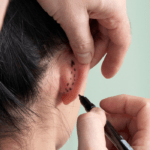
For this type of aesthetic surgery, an incision is made behind the earlobes, leaving only a small scar hidden after healing. In this way, through one operation we can change the shape of a person’s ear by removing some skin and reshaping it.
Other problems we can correct with otoplasty surgery are excessively large ears. Even microtia can be successfully treated.
Preparation and Procedure
Preoperative Assessment and Testing
During the initial consultation, the physician performs a physical evaluation of the nose and ears to explain the aesthetic goals and possible outcomes to the patient. In addition to the examination, the doctor will request blood work and other tests deemed necessary to ensure the patient is in optimal general health.
Type of Anesthesia and Estimated Duration
Because two surgeries are being performed simultaneously, the standard anesthesia is general anesthesia, for greater patient comfort and safety.
The complexity of the procedure will determine the duration. A rhinoplasty can take between one and three hours, and otoplasty between one and two hours; therefore, the combination of both may take between three and five hours.
Order of Techniques: Nose or Ears First?
Generally, otoplasty is performed before rhinoplasty. During a rhinoplasty there is a greater risk of bleeding, presence of nasal secretions, and greater contact with bacteria from the oral cavity and respiratory tract, which can contaminate and affect the sterile field.
Additionally, otoplasty requires moving the patient’s head, and during rhinoplasty the patient’s position must be carefully maintained.
What are the benefits of combined surgery?
The combination of two or more surgeries in a single day can offer numerous benefits to the patient.
- Aesthetic and Functional Advantages
By combining rhinoplasty with otoplasty, you will achieve a more harmonious face with a more aesthetic and balanced overall appearance, which translates into greater self-esteem and patient confidence.
In addition to this, a rhinoplasty can solve certain respiratory problems that affect your quality of life.
- Economic and Time Savings
Costs decrease when combining several procedures, such as these with a genioplasty.
Because you will only need to pay medical and operating room fees once. Undergoing both procedures has the advantage of receiving anesthesia only once. Likewise, you will go through only one postoperative period and recovery time will not be prolonged, as one procedure does not interfere with the other.
- Work-Related Benefits
When combining procedures, the number of days the patient must be absent from work is reduced.
- Postoperative Savings
By combining surgeries, their respective recovery periods are also eliminated. It is true that the postoperative period following a combined intervention may be somewhat more uncomfortable than that of a conventional procedure, but not significantly more.
- Social Savings
Patients do not experience repeated questions from those around them about how they are feeling or how the surgery went.
It is important to clarify that this type of surgery typically does not entail greater risk for the patient, but rather carries similar risk to that of a conventional surgical procedure.
What are the disadvantages?
Undoubtedly, the greatest disadvantage of undergoing rhinoplasty and otoplasty at the same time in Madrid is having to experience both postoperative periods simultaneously. During the first few days you will notice swelling and mild discomfort in both areas, which can be well managed with pain medication.
However, the greatest disadvantage of this type of combined intervention can simultaneously be viewed as an advantage, since it is likely that you will experience more discomfort in one area and much less in another.
Although these are safe procedures, as with any surgery, risks or complications exist. While rare, it is important to be aware of them.
- Risks Associated with Rhinoplasty
The main risks involve bleeding after surgery, which can be mild or severe. It is also possible that an infection may occur that requires antibiotic use.
Other problems associated with this surgery include: impaired breathing capacity, negative reaction to anesthesia, numbness and sensitivity in the face and nose, which may last for months. Additionally, it is possible not to achieve the expected results. All of this will decrease your chances if you choose an experienced surgeon.
- Potential Complications of Otoplasty
Following otoplasty, the risks and complications are similar to those of rhinoplasty.
These include bleeding, mild or severe, adverse reaction to the effects of anesthesia, infections that may deform the cartilage, as well as unsatisfactory results.
Ideal Candidates for Surgery
It is common for nose surgery to be combined with other facial aesthetic procedures, such as otoplasty.
In general, to undergo both surgeries, the person must be in good health and have realistic expectations regarding results. Normally, the initiative arises from feeling dissatisfied with the shape or appearance of both their ears and nose.
Let’s look, in particular, at who are candidates for these operations.
Criteria for rhinoplasty
The surgeon will evaluate:
- Nose shape.
- Facial symmetry.
- Size of the nostrils.
- Respiratory function condition.
Criteria for otoplasty
To determine if otoplasty is the right surgery for you, these are the criteria your surgeon will consider:
- Ear shape. That is, whether ears are protruding or oversized.
- Asymmetrical ears.
- Ear deformities.
- Presence of holes in the earlobes.
It is worth mentioning that these are general criteria, and only your treating surgeon can tell you whether you are a good candidate for otoplasty and rhinoplasty or not.
Prices and influencing factors
The price of having a rhinoplasty and otoplasty at the same time can range from €6,500–10,000.
Technology used, complexity and fees
In combined surgery, rhinoplasty can be performed using traditional or ultrasonic technique. While otoplasty is performed using traditional techniques. The combination is a more complex procedure, due to the number of hours in the operating room, prolonged anesthesia and the need for an expert medical team, which affects the price of the surgery.
Also keep in mind that a surgeon with experience, extensive reputation and specialization will charge higher fees, but this is also a greater guarantee of successful results.
Number of nights, medication and dressings
An aspect you can also consider in your budget is the number of nights at the clinic; keep in mind that these aesthetic surgeries do not require a very long hospital stay, 1 day is the standard time. Prescribed medication includes antibiotics, painkillers and anti-inflammatory drugs.
Rhinoplasty requires a nasal splint and in some cases, nasal packing. Otoplasty dressings are generally a bandage around the head for ear protection.
Post-operative care
Recommendations after rhinoplasty
Following rhinoplasty, rest is essential, as well as following your surgeon’s instructions. Taking prescribed medications, avoiding physical activity, sleeping with your head elevated, lying on your back, and keeping your nose clean are the most important recommendations to keep in mind during this process.
Advice after otoplasty
In addition to the care we mentioned before for rhinoplasty, in the case of otoplasty, there are other complementary care measures, such as:
- Use the headband that holds your ears according to your surgeon’s instructions.
- Do not wash your hair while you have bandages.
- Avoid any activity that could hit or bend your ears.
- Do not scratch or remove scabs.
Conclusions
Therefore, the conclusion is clear. Whenever we want to undergo rhinoplasty and otoplasty at the same time in Madrid, it will be more advisable to have them done together rather than one first and then the other.
At Sculpture Clinic we are specialists in all types of facial surgery interventions, always surrounded by the best team of professionals. Book your appointment today and we will conduct a detailed study of your case to see which techniques best suit your needs, to give you the result you desire.
Frequently asked questions
Can they be combined with ultrasonic rhinoplasty?
Yes. It is one of the most widely used techniques for rhinoplasty, thanks to its multiple benefits.
Can I add mentoplasty or other facial refinements in the same session?
It is possible, but it is not a definite fact. It must be analyzed together with your surgeon, considering factors such as patient health and operating room time.
When can I return to work and sports?
Office work or activities that do not require physical effort, as well as light walks, patients can resume after a couple of weeks from surgery. While more strenuous activities should be incorporated gradually starting from week three.