Posted by Dr. Miguel Fernández Calderón: 18/08/2026
Stage 2 lipedema is the progression of lipedema disease; it differs from stage 1 in that the symptoms become sharper and the volume of diseased fatty tissue in the limbs increases. Read on to learn more about the distinctions between these conditions and what the treatments are.
What is stage 2 lipedema?
Stage 2 lipedema is the progression to the second phase of a chronic, progressive disease that affects the adipose tissue accumulated in the limbs (legs and arms).
It is characterised by a symmetrical and disproportionate increase of fat in those areas; the disease generally affects women and considerably compromises their quality of life.
Symptoms of stage 2 lipedema
In the second phase of lipedema disease, the skin begins to show significant changes from the accumulation of fat and the symptoms become sharper. By this phase the patient’s health is already compromised.
How the skin and the distribution of fat change
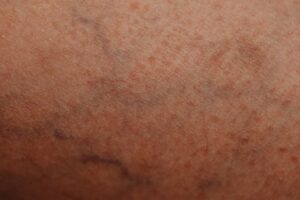
In phase 2 of the disease, the surface of the skin becomes visibly uneven, with thick, palpable fatty nodules appearing, as well as dimples and bumps similar to cellulite.
The accumulation of fat from lipedema in the arms and legs is symmetrical, but it does not affect the hands and feet.
Pain, heaviness, swelling and bruising
The symptoms become more intense, which indicates that the disease is progressing. The pain and burning are constant and strong when the area is touched or brushed against; on top of that, the patient begins to have mobility problems.
The sensation of tiredness, fatigue, heaviness and swelling in the legs or arms also increases, and bruises appear more easily, even without any knock.
Differences between stage 1 and stage 2 lipedema
The main differences between stage 1 lipedema and stage 2 lie in the appearance of the surface of the skin.
In stage 1 lipedema, the skin is still smooth, even and soft to the touch, although small fatty nodules are starting to appear; in stage 2, the skin is uneven, it thickens further, the nodules grow and bumps or dimples form.
Symptoms such as pain or heaviness are mild and sometimes absent in the initial phase of the disease; in the second phase they begin to be more intense and chronic.
In stage 1 lipedema a slight increase in volume can be seen in the affected area; in stage 2 the increase in volume is greater and disproportionate.
How is it diagnosed and what can it be confused with?
For a correct diagnosis of lipedema, the specialist will carry out a thorough physical assessment of the patient. They will assess the condition of the skin, the intensity of the pain and the appearance of bruising, among other aspects. They will also review the patient’s medical history and, if necessary, complement the diagnosis with other types of study, such as an ultrasound scan or a Doppler ultrasound.
This disease can be confused with others that present similar symptoms and characteristics, such as obesity, lymphoedema, panniculitis and chronic venous insufficiency. That is why it is important to see a specialist with experience in lipedema.
Treatment of stage 2 lipedema
Treatment of stage 2 lipedema starts with what is medically known as conservative therapy or conservative treatment (compression garments, lymphatic drainage, exercise and diet). There is no strict or exclusive therapy for each stage or phase of the disease; rather, it is adapted according to each patient’s symptoms.
If conservative treatment does not work, then the option of surgery is assessed, which is normally not covered by Social Security.
Compression garments, exercise and diet for lipedema
The use of compression garments must be prescribed by the specialist and made to the patient’s measurements. They should be worn all day long in order to apply pressure to the tissue, improve circulation and relieve heaviness.
Gentle or low-impact physical exercise adapted to each patient is recommended; this may be swimming, cycling, walking or strength exercises.
As for diet, the patient should improve their habits, include more fruit and vegetables on the menu, cut sugars and ultra-processed foods from their daily diet, reduce salt intake and eliminate inflammatory fats.
When is surgery recommended?
Surgery becomes an option when conservative treatment does not deliver the expected results and the disease keeps progressing, compromising the patient’s health — not only physically, but emotionally and psychologically as well.
Liposuction for stage 2 lipedema
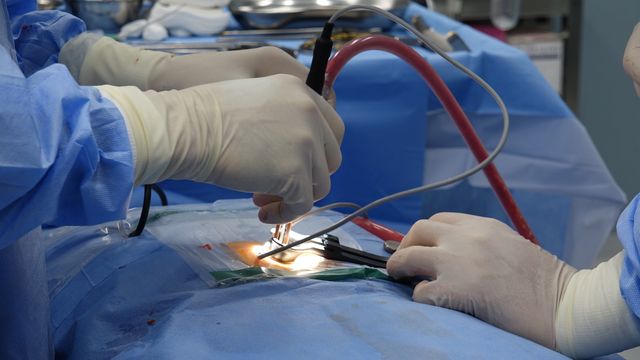
For stage 2 lipedema surgery, WAL liposuction is generally used, which removes the diseased fatty tissue. This type of liposuction protects the blood vessels, the lymphatic ducts and the surrounding tissues.
WAL liposuction is an advanced surgical technique that consists of applying a jet of saline solution at controlled pressure through fine cannulas to loosen, detach and extract the fat simultaneously. With this procedure the surgeon does not need to make abrupt or forceful movements to detach the diseased fatty tissue, which considerably reduces post-operative swelling and bleeding.
Frequently asked questions about stage 2 lipedema
Is there a cure for stage 2 lipedema?
No, there is no cure for stage 2 lipedema, since it refers to a disease of the adipose tissue, but there are currently surgical techniques and procedures that help relieve the symptoms and halt the progression of the disease.
Can you lose weight with stage 2 lipedema?
Yes, a patient can lose weight with stage 2 lipedema, but the disease does not go away with diet or exercise; fat will be lost from the healthy parts of the body, but not from those affected by lipedema.
Does stage 2 lipedema always need surgery?
No, stage 2 lipedema does not always require surgery; it all depends on the level of pain, swelling and fat deposits the patient has. In some cases the disease is controlled with conservative treatments (compression garments, lymphatic drainage and so on).
Living with stage 2 lipedema: when to ask for specialist help
There is no cure for stage 2 lipedema, but an early diagnosis and a tailored treatment, whether conservative or surgical, can halt its progression and improve the person’s quality of life. So if you notice pain, frequent bruising or swelling in your legs or arms, speak to one of our specialists.
References
- Mediespaña. https://www.mediespana.com/diagnostico-tratamiento/lipoedema
- Sociedad Española de Médicos de Atención Primaria (SEMERGEN). https://www.seme.org/revista/articulos/lipedema-y-linfedema-hacia-un-diagnostico-diferencial-correcto
- SciELO Chile. https://www.scielo.cl/scielo.php?script=sci_arttext&pid=S2452-45492021000300370