Publicado por Dr. Miguel Fernández Calderón: 20/06/2025
Having lumpy breasts is a rather uncomfortable condition for men who suffer from it. Although at first glance it may look the same and you can't tell what the cause is. If you are going through this situation, surely you have asked yourself the following question How do I know if I have gynecomastia or if it is fat? Read on to find out the answer.
How do I know if I have gynecomastia or if it is fat?
Have you ever looked in the mirror and noticed that your breast area looks lumpy as if you had female breasts? Would you like to know if it is excess fat, perhaps caused by being overweight, or if you really suffer from gynecomastia?
As experts in gynecomastia in Madrid Spain, we will talk about 4 aspects that can help you know if what you see in your body is due to gynecomastia or if it is fat.
Note the hormonal changes
During adolescence, hormonal changes are normal. And in a large percentage of young males, it is normal to see an increase in the size of their breasts. These changes in the body will reverse themselves within a year or two.
But if you are in your 30s and 40s, and your breasts have a size that you feel is out of the ordinary. Then, you should pay attention if you have had mood swings, have felt weak or have lost your libido, it is possible that you are going through hormonal problems.
Take a look at
A self-exam can help you define which of these two conditions you have. Touching your chest in front of a mirror will give you an idea of how it feels.
Si se siente suave y flácido, esas características están asociadas a depósitos de grasa. En cambio, si se siente firme, lo más seguro es que se trate de una ginecomastia.
This self-examination is performed in a manner similar to that which women perform to detect breast cancer.
In that same self-examination we just talked about, you should take the opportunity to feel if you have a lump in that area. If you find a small lump near or under the nipple, it is a sign of gynecomastia. Although that lump can also be breast cancer, the reality is that this condition is rare in men.
La diferencia entre ginecomastia y cáncer de mama, no resulta obvia, por lo cual lo más recomendable, si siente algo extraño, es asistir a una revisión médica.
Sensitive points
Feel the breast for places where you feel tenderness. Gynecomastia may cause your skin to have some tenderness, especially in the area near the nipples. Fat does not produce any sensation when touched.
Check your nipples
If you are looking to find out if you have excess fat or gynecomastia, your nipples can give you signs. When talking about gynecomastia, the nipples may be swollen and stiff. Sagging is still a sign that too much fat is present.
Discharge may also come from the male nipples. Whether you see fluid in one or both nipples, this can be a sign of gynecomastia, but it can also be a sign of breast cancer or a testosterone deficiency.
Si observa que sus pezones descargan algún líquido, consulte de inmediato al doctor.
This is a small guide that can help you understand what is happening in your body, but if you have any doubts, the best thing to do is to ask for an evaluation so that you can be seen by one of our specialists. And, after the evaluation, answer your concerns and can give you a diagnosis.
Differences between gynecomastia and fat
To understand the difference between gynecomastia and breast fat, let's first talk about both concepts.
Gynecomastia is an excessive growth of mammary tissue and glands in men, which gives the appearance of having female breasts. For this reason, it is also known as "male breasts".
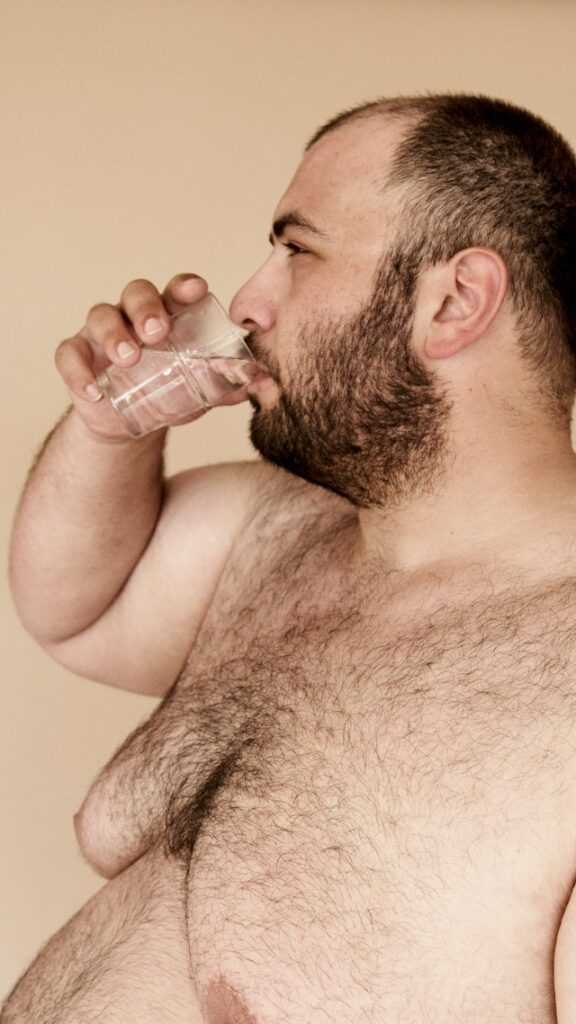
It does not look the same in all cases. In some men only small masses of breast tissue appear around the nipples, but in others the tissue growth is much more evident and they look more like female breasts. This can be quite uncomfortable both physically and psychologically.

On the other hand, chest fat refers to the accumulation of fat deposits in the male chest area. This accumulated fat is also known as pseudogynecomastia, and is a product of obesity or excessive weight gain.
Una forma de saber cómo diferenciar ginecomastia de grasa, es con un examen físico, como el que mencionamos antes. Al palpar la zona, la ginecomastia se siente diferente a la grasa, ya que el tejido mamario se siente más firme que la grasa. La grasa de la pseudoginecomastia es suave al palpar y está presente en toda el área pectoral.
Otra diferencia entre grasa pectoral y ginecomastia es que la ginecomastia duele y es sensible al tocar el área, la grasa no. La grasa produce que el seno masculino se vea más flácido, y la ginecomastia en el área del pecho luce más firme.
En los pacientes con exceso de grasa, una dieta saludable y ejercicios pueden funcionar para mejorar la condición. En cambio, para aquellos que sufren de ginecomastia no lograrán ningún cambio, aunque adquieran hábitos más saludables.
A specialist will be the best person to recognize the difference between gynecomastia and pseudogynecomastia in each patient. By performing the necessary examinations and evaluations, he/she will be able to give a diagnosis and offer the best treatment.
Diagnóstico definitivo
Para poder determinar si la condición del paciente es una ginecomastia o una pseudoginecomastia, el médico puede realizar un examen físico, pero hay casos en los que debe optar por procedimientos con imágenes o análisis de sangre.
Cuándo es necesaria la ecografía
Si el médico tiene sospechas de una ginecomastia, una ecografía es una de las pruebas utilizadas para llegar a un diagnóstico acertado. Gracias a una ecografía se puede visualizar el tejido mamario, y así diferenciar si el aumento de pechos masculinos se debe a la acumulación de grasa (pseudoginecomastia) o si es provocado por un aumento del tejido mamario (ginecomastia).
Valoración médica: qué pruebas se usan
Para diagnosticar una ginecomastia, además de una ecografía, el médico puede indicar una mamografía o una resonancia magnética. La mamografía permite al especialista descartar otras patologías que puedan estar causando el aumento del pecho masculino, y una resonancia puede ser necesaria cuando la ginecomastia es profunda.
Por otra parte, los análisis de sangre se pueden medir los niveles de hormonas, que pueden ayudar a identificar desequilibrios hormonales, así como la presencia de indicadores tumorales.
Tratamientos según el tipo
Opciones para ginecomastia
Una vez que el médico realiza un diagnóstico de ginecomastia, este puede indicar medicamentos para controlar los niveles hormonales o que bloquean los efectos del estrógeno en el tejido mamario.
Otra opción es la cirugía. Puede ser una mastectomía, para eliminar el tejido mamario glandular en exceso. En algunos casos, se puede combinar la mastectomía con una liposucción.
There is a surgery to eliminate gynecomastia. This is usually the most recommended solution, but each patient is different, so you should wait for medical indications.
Opciones para pseudoginecomastia
Debido a que la pseudoginecomastia se forma por la acumulación de grasa en el pecho masculino, es posible reducirla con dietas y ejercicios. Al tener un plan de alimentación saludable y una rutina de ejercicio es posible eliminar la grasa acumulada, en especial en pacientes con obesidad.
En casos, en los que el ejercicio y la dieta no resultan efectivos, el médico puede recomendar realizar una liposucción, a través de la cual, por medio de pequeñas incisiones, se introduce una cánula muy delgada, que permite al cirujano extraer toda la grasa excedente, y moldear la zona del pecho.
If you got here looking for the answer to how to know if I have gynecomastia or if it is fat, we think the best way is to ask for a medical consultation. Here we explain some ways to examine yourself and what signs you can find, but that will only be a guess until a specialist evaluates you and can give the correct diagnosis.