Posted by Dr. Miguel Fernández Calderón: 16/07/2025
Lipedema is a little-known and uncommon condition that many might confuse with being overweight or obese. If you have already identified the symptoms, you may be considering lipedema surgery as a solution. For this reason, we believe it is important that you know how to identify if I have lipedema, since it requires a different approach for both diagnosis and treatment.
What is lipedema?
It is a progressive disorder of adipose tissue. Of a chronic nature, since there is an unequal and pathological accumulation of body fat in certain areas of the body (arms and legs).
Main characteristics
The main characteristic of lipedema is the disproportionate distribution of fat in the legs, hips, and in some cases the arms.
This type of condition affects only women, and unlike what can happen with obesity and being overweight, lipedema does not improve with diets or exercise. It is very likely that liposuction will be required to treat it.
How to know if I have lipedema: Symptoms
Pain and sensitivity to touch
Lipedema can cause intense pain or great sensitivity in the affected area when applying pressure to the legs or squeezing the arm. In some patients, even with minimal contact, or even from clothing rubbing, significant discomfort can be felt.
Sensation of heaviness and fatigue in extremities
Due to the amount of accumulated fat, lipedema can feel like carrying extra weight in the legs or arms. This produces a sensation of heaviness, pressure, or fatigue in the affected area, which does not reduce when elevating the legs.
People who experience these symptoms may have mobility problems and difficulty performing physical activity.
Frequent appearance of bruises and capillary fragility
Many patients with lipedema present capillary fragility in the affected area, which causes frequent hematomas or bruising, often without reason, and in some cases, from very minor trauma that would not normally cause bruising.
Symmetrical accumulation of fat in legs and arms
Another sign to take into account is that in lipedema, the affected arms or legs present a similar accumulation of fat, giving them a symmetrical volume. Both areas may look very similar in size, while the rest of the body appears disproportionate, possibly appearing to have normal weight or even lower.
Feet and hands spared: differential sign
It is also important to note that although arms and legs may present greater volume due to the accumulation of fatty tissue, the hands and feet are not affected by this condition, so their appearance and size are typically normal in comparison.
Phases or stages of lipedema
- Stage I – Nodularity and incipient nodules. In this first stage of lipedema, the skin may appear normal; however, there is a significant increase in the volume of thighs, hips, and arms due to fat accumulation. When touched, it is possible to feel some lumps in the subcutaneous tissue, which can cause discomfort and sensitivity.
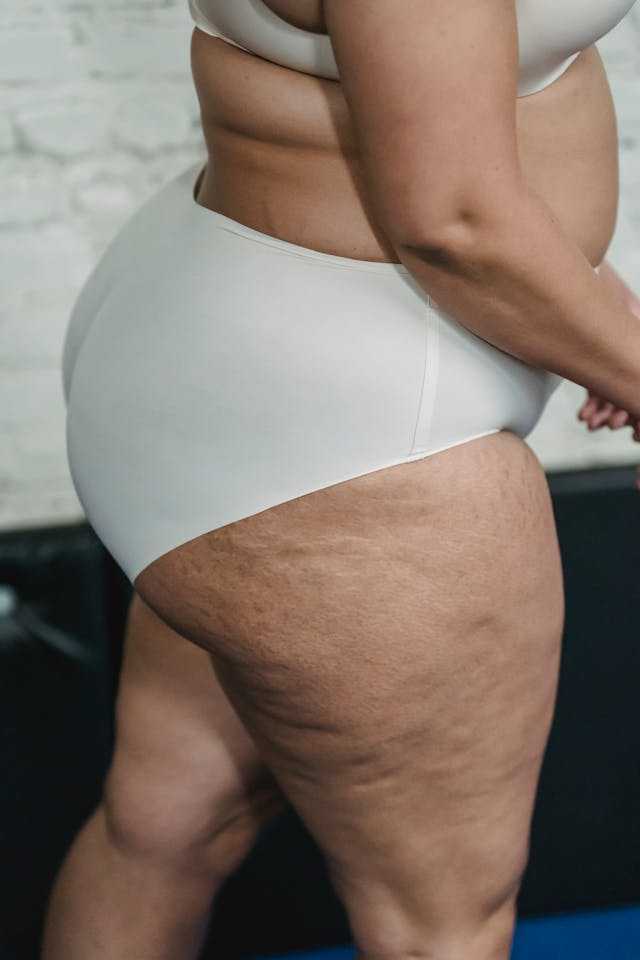
- Stage II – Nodular, “mattress-like” skin appearance. As lipedema progresses into stage II, the fat lumps are no longer just felt to the touch, but are visible, larger, and thicker. The skin begins to have an irregular appearance, and the presence of lipomas under the skin, hematomas, and discoloration of the skin becomes evident.
- Stage III – Deformation and fatty pendulous tissue. In the third stage of lipedema, larger clusters of fat can be observed. These fat deposits are coarse, hard, and sagging.
- Lipolymphedema / Stage IV – Lymphatic involvement. When lipedema is in an advanced state, progressive damage to the lymphatic system can occur, caused by excessive accumulation of fluid and fat in the body. At this stage, what is known as secondary lymphedema appears, in which swelling of the ankles and feet becomes evident due to fluid accumulation.
Causes and risk factors
Family genetic predisposition
According to studies conducted, lipedema can be caused by genetic predisposition. This means there is a higher probability of developing lipedema if a family member (mother, aunt, grandmother, or sister) also has it.
Hormonal influence
There is also evidence that female hormones, especially estrogens, have an effect on the development of lipedema. It has been observed that after stages such as puberty, pregnancy, or menopause, when hormones are altered, lipedema may begin or worsen.
Association with comorbid conditions
Although lipedema is not caused by obesity, it is true that obesity or being overweight are aggravating factors for the patient’s condition. The same occurs when a person has unhealthy eating habits and does not exercise regularly; lipedema can worsen.
Similarly, the hormone produced by the thyroid gland can cause alterations that may worsen lipedema.
How to identify if I have lipedema (self-check)
Checklist of frequent characteristics
If you are wondering how to know if I have lipedema, you can answer the following questions, and if the answer is yes, it is very likely that you do.
- Do I have fat accumulated disproportionately, that is, more in the legs and hips than in the rest of my body?
- When you touch or apply pressure to the accumulated fat, do you feel pain or sensitivity?
- Have you noticed that you get bruises on your legs and arms without having bumped or injured yourself?
- Do you experience swelling in the legs, and despite applying techniques such as elevating your legs, it doesn’t improve?
- Have you frequently felt your legs heavy and tired?
- Do you exercise, and despite this, the fat accumulation doesn’t improve or decrease?
- Have you noticed that you have lumps or nodules under your skin?
When to see a specialist?
If you answer affirmatively to the above questions, it is important that you visit a lipedema clinic in Madrid for a physical check-up and, if necessary, for complementary tests to determine if your suspicion of lipedema is correct.
Similarly, if you have some symptoms and have a family history of lipedema, it is also recommended that you make an appointment with your doctor.
Clinical and differential diagnosis
A plastic surgeon, dermatologist, or vascular surgeon are the professionals qualified to make an accurate diagnosis of lipedema. Through a physical examination and also an interview of the patient’s medical and family history.
Complementary tests: Echo-Doppler, lymphography, ultrasound
Some complementary tests such as an ultrasound may be necessary to visualize the distribution of adipose tissue. A Doppler ultrasound of the lower limbs is useful, as it allows checking blood circulation and ruling out venous problems, as well as observing changes in adipose tissue.
Also through lymphography, the lymphatic flow can be evaluated. Additionally, this test is useful for diagnosing associated lymphedema.
Differentiating from obesity, lymphedema, cellulitis, and venous insufficiency
Obesity is a condition in which the patient has excessive fat accumulation overall, that is, it is usually evident throughout the body. Lymphedema, on the other hand, is an obstruction of the lymphatic system.
Although the appearance of cellulite can be confused with lipedema in its initial stage, cellulite is a bacterial infection that occurs in the skin and subcutaneous tissue.
As for venous insufficiency, it is a problem in which the veins struggle to return blood to the heart.
Treatment options
Conservative – compression, drainage, exercise
Using compression garments or performing lymphatic drainage are options that help improve lymphatic flow, which reduces swelling. Low-impact exercise can reduce symptoms and prevent the condition from worsening.
Diet and anti-inflammatory lifestyle
A diet based on fresh foods, reducing the consumption of ultra-processed products, and incorporating healthy fats, foods rich in fiber and antioxidants, can help improve some symptoms and reduce the progression of the condition.
Surgical treatments
Conservative measures can mitigate discomfort and reduce some symptoms; however, if you are seeking a definitive treatment option, all diseased adipose cells must be removed.
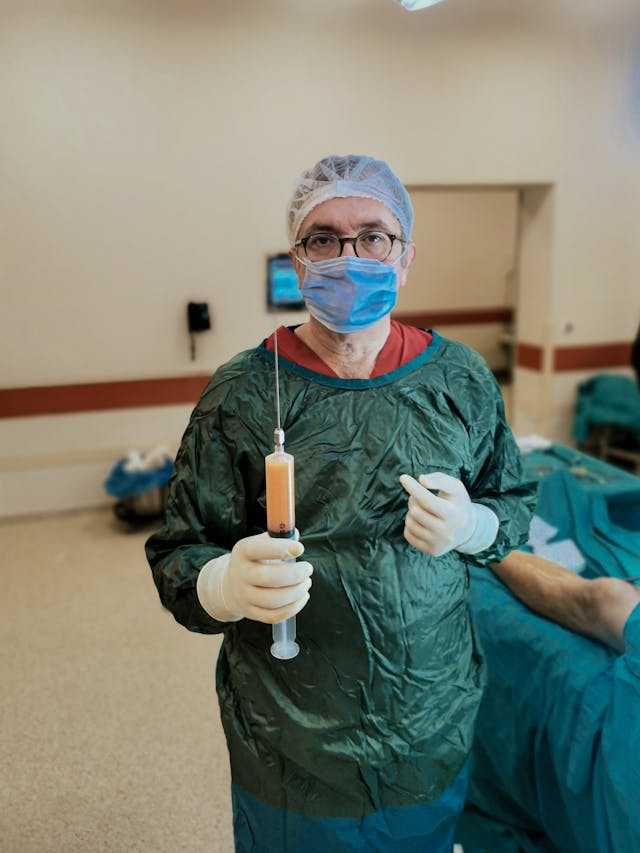
This can be achieved with advanced techniques, such as WAL liposuction, water-assisted, or PAL liposuction, power-assisted, in which a vibrating cannula is used to break down fat. When undergoing these procedures, it is important to take measures after liposuction to maintain results.
Complementary therapies
These types of therapy can be useful in the early phase of lipedema or as support for other treatments. Mesotherapy, carboxytherapy, and cryotherapy serve to improve the appearance of fat deposits, reduce pain and inflammation, as well as help with better blood circulation and to prepare you for liposuction.
Conclusion and next steps
After reading this information, we are confident that you have a much clearer picture of how to identify if I have lipedema. If you experience symptoms such as greater fat volume in the legs and arms, with the exception of the feet and hands, and/or you have pain and sensitivity in those body areas, these may be signs of lipedema. Given this, it is essential to consult with a specialist who can make an accurate diagnosis and offer appropriate treatment.