Posted by Dr. Miguel Fernández Calderón: 29/12/2023
Patients who wish to have a more sculpted face with more defined angles turn to the extraction of Bichat’s fat pads. This surgery has become one of the most popular, but what is bichectomy and what is this procedure for? Below, we give you all the details you need to know.
What is bichectomy?
Bichectomy is a surgical procedure in which a small incision is made inside the mouth and fat pads (known as Bichat’s balls or pouches) are removed to improve facial features. The result in the patient, by having a more elongated face, is improved aesthetics as well as self-esteem and confidence.
Defined and harmonious features are often a request from our patients. It’s true that every face is beautiful in its own way, but defined and refined features, while maintaining proportion and naturalness, are a highly sought-after and desired characteristic today.
Fortunately, nowadays there are very safe interventions for this. Specifically bichectomy, which is a simple and quick surgery with predictable results, as long as a thorough study and accurate diagnosis are carried out beforehand.
In the context of facial surgeries, bichectomy is among those with the highest demand. Thanks to the removal of Bichat’s fat pads, more refined and defined features are achieved. The face changes and loses that rounded appearance that some people are not satisfied with.
This surgery is for both men and women. It can be performed in less than an hour and recovery is quick.
What does the surgical procedure involve?
The removal of Bichat’s pouches or bichectomy is the recommended procedure for both men and women to reduce the size of their faces and make them thinner and more angular.
A surgeon performs the operation by making a small incision on the inside of the patient’s cheeks, which is then retracted to expose the fat layer and remove the necessary amount. Finally, the incisions are sutured.
The surgery takes approximately 45 minutes to one hour. It is performed on an outpatient basis and normally under general anesthesia and sedation when it’s a single procedure.
Benefits of Bichectomy
For patients with round faces and no defined angles, bichectomy is a surgery that offers more defined cheeks and a more sculpted face. Let’s see what other advantages this procedure provides:
Aesthetic and functional improvements
One of the main benefits of bichectomy is achieving a defined facial contour. This is achieved by removing the Bichat fat pads, which immediately slims the cheeks and gives the face a more harmonious appearance, more aesthetically pleasing and a more defined facial structure where the cheekbones and chin stand out.
Bichectomy also makes the face look more elongated and streamlined. Additionally, in round or square-shaped faces the patient will see their face more balanced.
In addition to the aesthetic aspect, removing Bichat’s fat pads from the mouth can help improve chewing. These fat deposits, especially if they are large, can interfere with chewing, and removing them facilitates the process. It has also been observed that after a bichectomy, patients with bruxism experience improvement in this condition.
What are Bichat's pouches or fat pads?
These are two distinct fat deposits, well-defined and independent from other tissues, located in both cheeks, below the cheekbones and directly related to the buccinator muscles.
These fat pads are typically larger in children than in adults, which gives them a rounded facial contour similar to that of a baby’s face. Depending on our personal preference, we may find these small fat pads more or less attractive.
However, as we age, these fat pads begin to diminish, creating more refined facial features. Some people experience this reduction as something positive, so it is possible that they may not want to wait for aging to see them reduced and may wish to undergo surgical intervention.
It is common for Bichat fat pads to be associated with excess weight. Nevertheless, this is a misconception because a person can have a rounded face and still be at their ideal weight.
Who is the ideal candidate for this surgical procedure?
This procedure is perfect for all those people, both men and women, who feel that their face is too rounded despite being at their ideal weight. Ideally, the patient should be young, under 40 years old, and have well-defined cheekbones.
People who are overweight are not good candidates for this surgery, since as they lose weight their face will change. Therefore, it is best to wait for the patient to reach their ideal weight before undergoing bichectomy. Otherwise, the results may be unfavorable in the future.
Before undergoing any type of procedure, we must carefully consider the opinion of the surgeon, who will evaluate you, give you her best advice, and answer any questions you may have.
How do I know if I'm a candidate for bichectomy?
As we mentioned earlier, Bichat fat pads are largely responsible for giving our face a round appearance. Therefore, this surgery is designed for:
- All those people who have a rounded face.
- Those who have excess fat in the cheeks.
- People who, due to their genetic characteristics, seek to make their face more refined and sculpted.
This surgery is very effective, but it is important to remember that it only removes the Bichat fat pads. It will not be efficient for other facial problems. It will not change the shape of your jaw or lips.
It is preferable that candidates for bichectomy have an ideal weight or close to it for their height. Since removing the Bichat fat pads from someone who is overweight will result in barely visible results.
Another aspect that makes you a good candidate for bichectomy is that you are over 20 years old. It is possible to have the surgery earlier, but doing so provides no guarantee that your face will not change, as facial development is estimated to be complete around age 20.
Age is one of the characteristics that can affect the procedure. Therefore, the perfect age range for undergoing bichectomy is between 20 and 45 years old. This is because skin quality and elasticity are lost as we age.
Many overweight people mistakenly think that if they remove their Bichat fat pads, their face will stop looking so round. The truth is that while it may reduce some of the facial roundness, bichectomy is not recommended for people who are above their ideal weight.
It is recommended that the surgery be performed on people with a weight appropriate to their height, who despite being at their ideal weight, still have facial roundness.
That said, it is important to have a consultation with a specialist before proceeding with a bichectomy in Madrid.
Each case is unique, and the surgeon will be the one who can truly determine whether or not you are a good candidate for bichectomy.
Male bichectomy
The male bichectomy procedure is the same as for women, but the goal for men is to achieve a more masculine, rugged, and angular appearance.
By reducing cheek volume, the jawline appears more defined. Additionally, the face can appear sculpted or lean.
While for some men with a rounded face, the procedure successfully eliminates a ‘baby face’ appearance.
Pre-operative care and preparation
Initial evaluation and recommendations
Consulting with a surgeon for an initial consultation is the first step to determine if you are a suitable candidate for bichectomy. During this visit, the physician will perform a physical evaluation of your face, as well as assess your overall health.
The surgeon will also discuss your expectations and explain the benefits and risks of the surgery.
Habits to avoid before surgery
Your surgeon will advise you to stop smoking and consuming alcoholic beverages at least two weeks before the procedure. There are also certain medications that should be discontinued or adjusted prior to surgery, which you will discuss with your treating physician.
On the day of surgery, it is recommended that you do not consume food or beverages for eight hours before the bichectomy, and that your face be clean and free of makeup.
What is the postoperative period like after bichectomy?
Bichectomy is a minor, minimally invasive and very safe procedure, so recovery during the postoperative period will not be too complex:
- It is not a painful procedure during the operation, nor in the period following it.
- You may experience some minor discomfort after a few hours. If so, you can manage it by taking the medication recommended by your physician.
- It is an outpatient procedure, requiring no hospitalization.
- It is very safe with predictable results.
- The results are permanent, as we remove the Bichat fat pads permanently.
- During the first few days you may experience some swelling in the cheeks, but this will be completely normal.
- To help combat this inflammation, it is recommended to wear a compression bandage for the first few days. You can also use cold compresses on the area.
- You should sleep on your back to avoid putting pressure on the treated facial areas.
- During the first days you should also follow a soft diet and consume foods that are not spicy or very hot, as these can affect wound healing.
- Maintaining good oral hygiene is essential.
Bichectomy surgery in Madrid does not require a long recovery period. After a couple of days, the patient can return to their daily activities, as long as they do not perform intense physical exertion.
What’s more, this is a procedure that can be reversed. While we cannot replace the Bichat fat pads, if excessive fat loss occurs, fat can be repositioned by extracting it from another area of the body.
What should you avoid after bichectomy?
It is important to follow your surgeon’s instructions to ensure proper recovery from bichectomy without complications. Therefore, you must be strict about what you can and cannot do after the operation.
After surgery, you should avoid consuming alcohol and smoking tobacco for the time your specialist recommends. Consumption of these products delays recovery. Alcohol, in particular, can cause bleeding.
You should also avoid high-intensity exercise as it can affect wound healing. However, low-intensity exercise is possible during recovery.
Consult with your surgeon to see if you can combine this surgery with a rhinoplasty or other facial treatment.
How long does bichectomy recovery take?
One of the advantages of bichectomy is that its recovery is quick, and it is minimally invasive.
On the same day of surgery, the patient returns home. Although you can resume your normal life, as mentioned, you should not make strenuous efforts.
During the first few days there will be swelling on the face, so results will not yet be visible. As the weeks pass, the swelling decreases and your new facial features will become more noticeable. Final results will be seen six months after the procedure.
What are the results of bichectomy like?
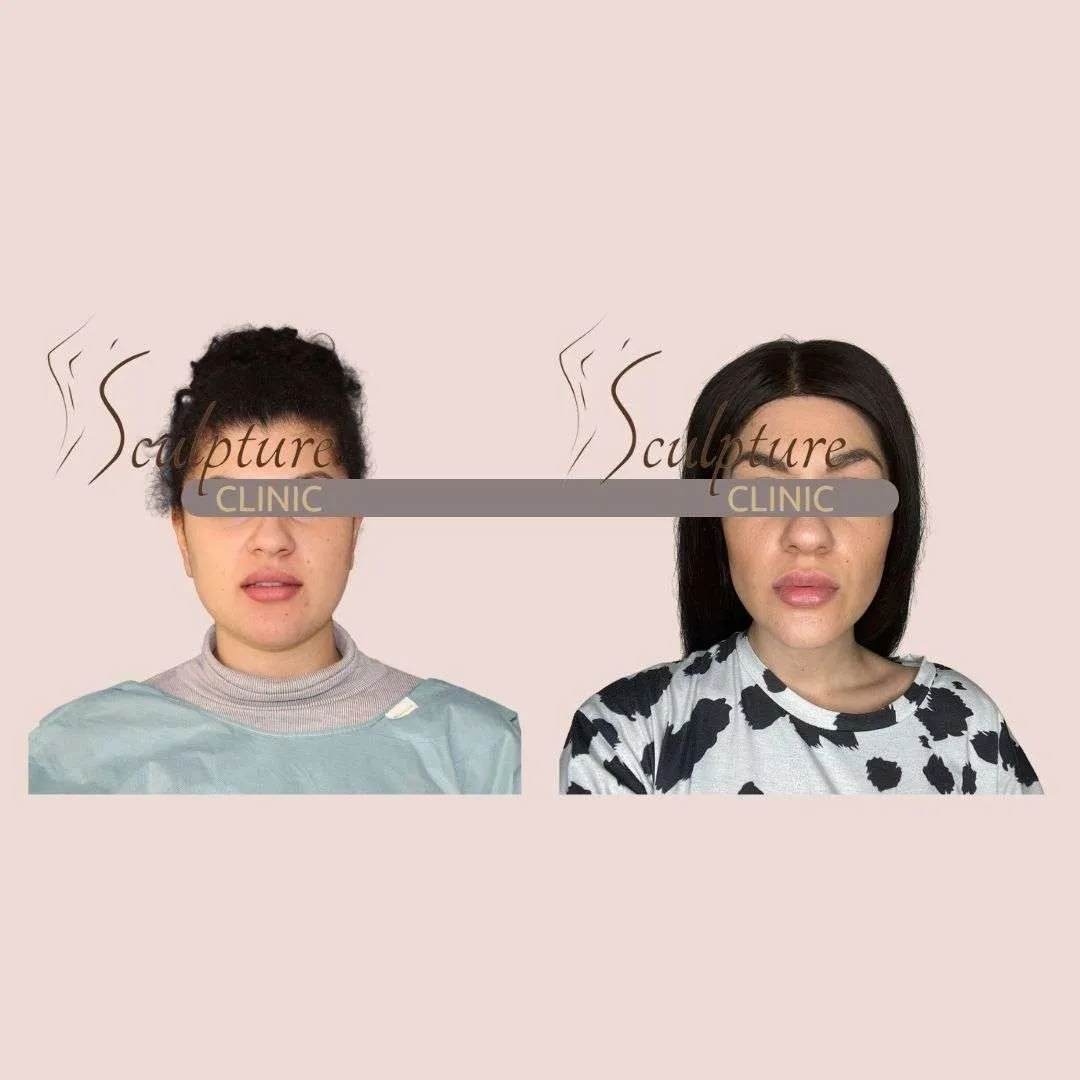
Results can be seen from the first weeks after surgery and are permanent. The goal of this procedure is to improve facial appearance by making the face appear more defined and slender, as well as highlight the cheekbones and define the mandibular border (the chin).
It is normal to have certain doubts when considering this intervention, for example, whether our cheeks will have a sagging appearance. Fortunately, the answer is no, since the Bichat’s fat pads are located within the thickness of the cheeks and are not part of the cheek’s fatty support structure, so they will not sag.
How long to see results?
The results of bichectomy are not visible immediately, since the swelling that occurs after surgery prevents seeing how the face will actually look. As the swelling decreases, which can happen after the second week, you will gradually begin to notice that the face appears more defined and the cheeks more contoured. After a few months of surgery, you will be able to see the final results.
Durability and maintenance
The results of bichectomy are permanent, since the Bichat’s fat pads do not reform.
In younger patients, results can be more lasting, due to greater skin elasticity. On the other hand, older individuals and, due to the effects of time, may see the initial results of surgery change due to loss of facial elasticity.
There is no specific formula for maintaining a bichectomy; however, following the surgeon’s recommendations and having proper postoperative care ensures better results.
Bichectomy before and after
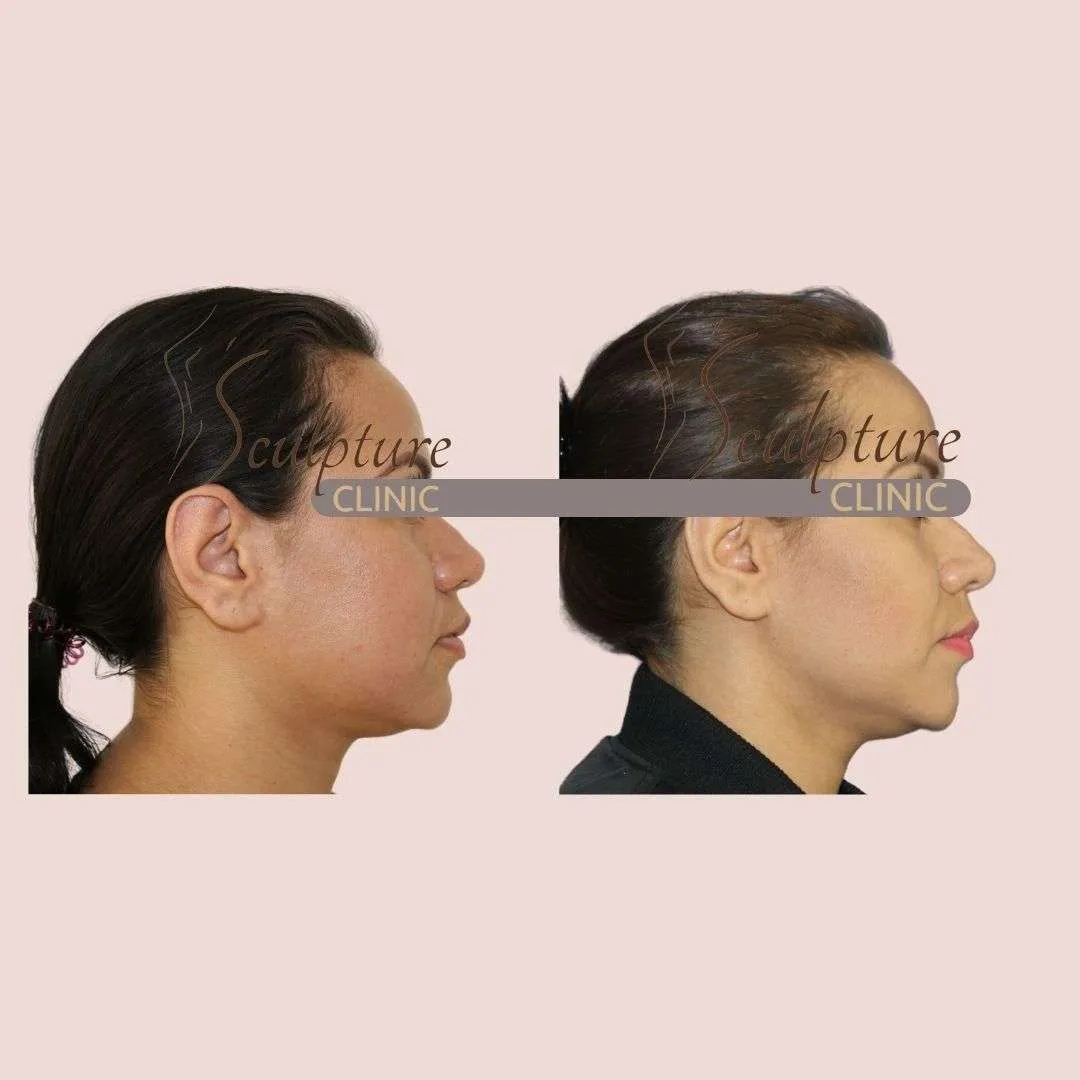
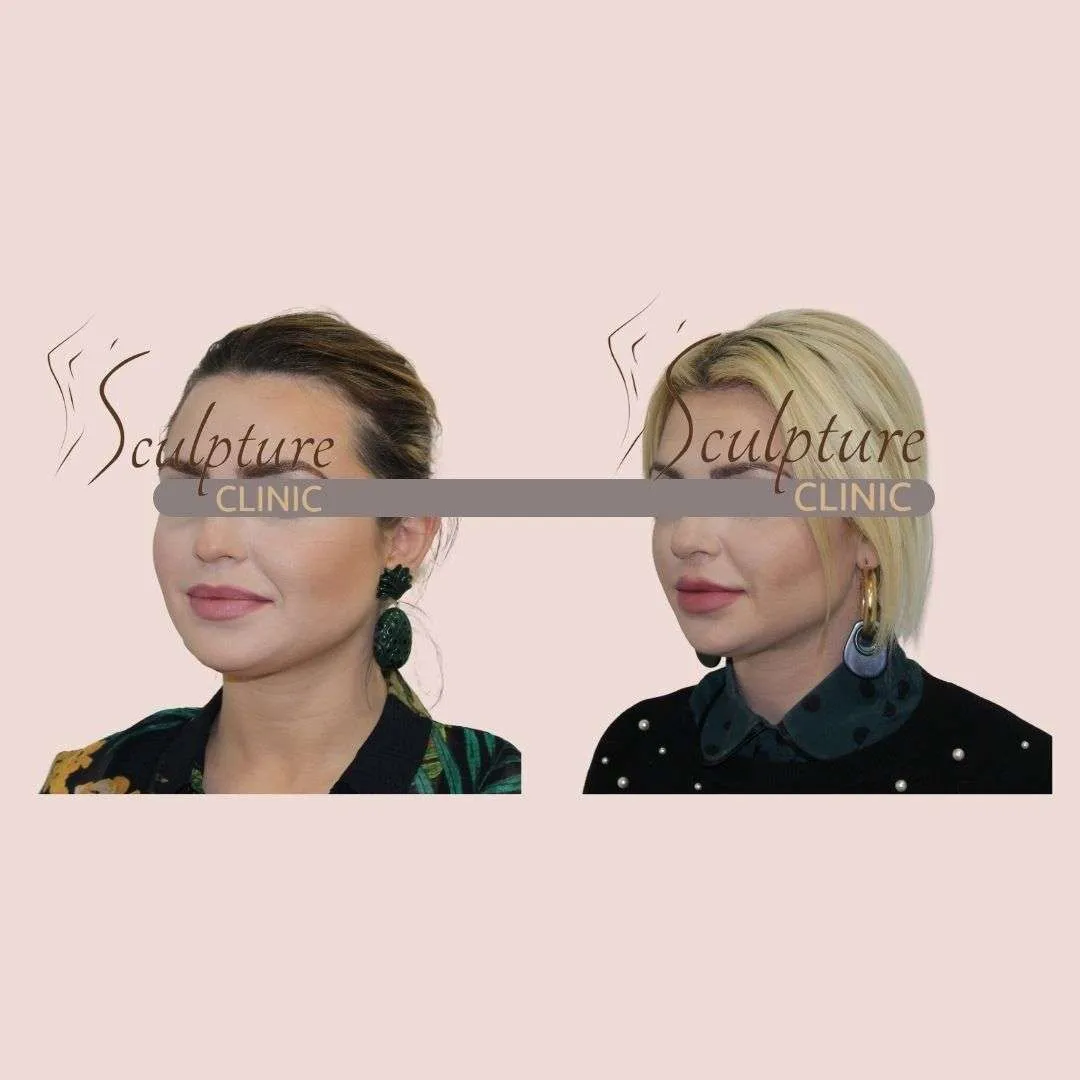
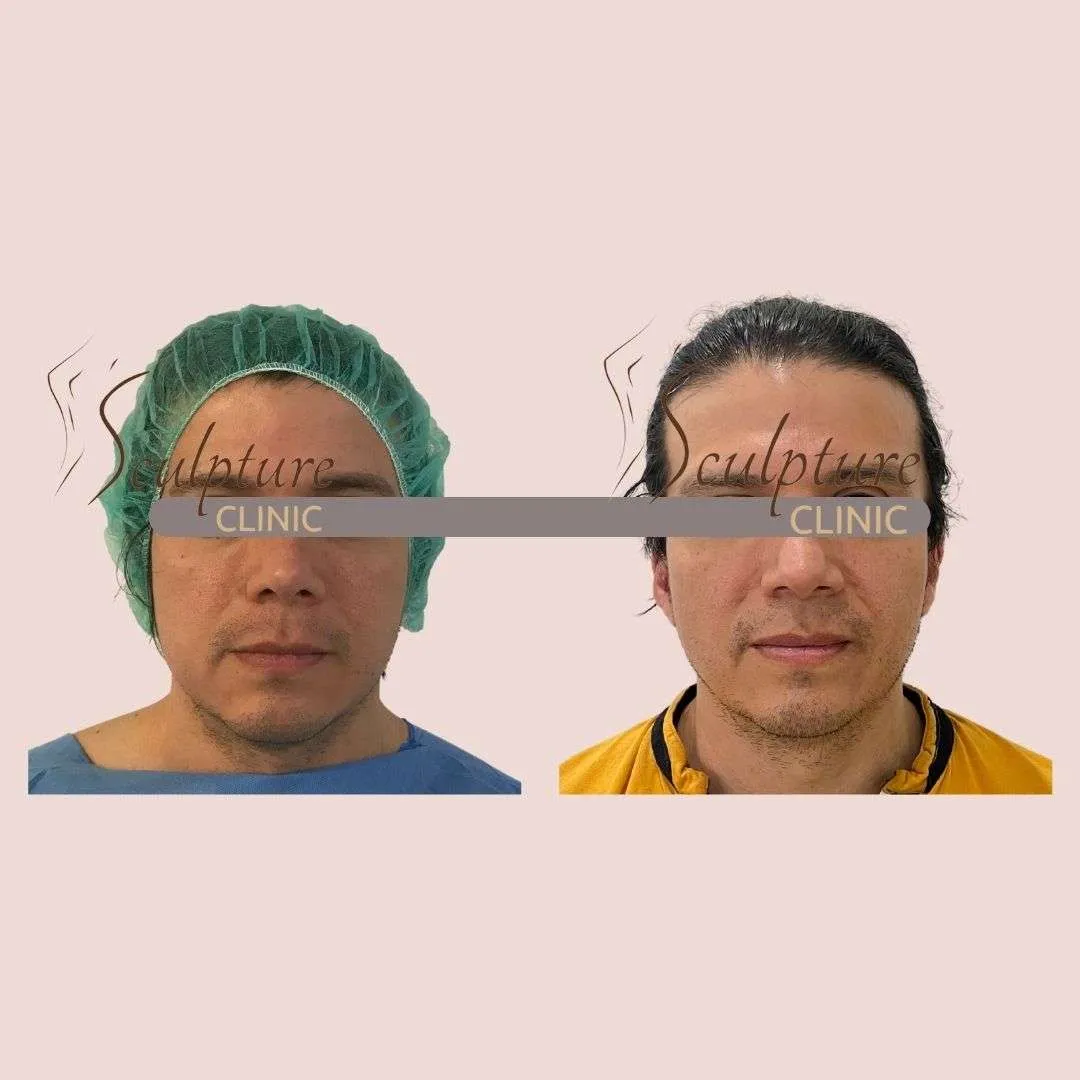
Does bichectomy have risks and complications?
It is true that any surgery, however safe it may be, is not free from certain risks and complications. However, these are minimized when we choose a good professional team and when we have proper prior evaluation and diagnosis.
- The most common is to experience postoperative aesthetic discomfort, but these can be prevented with proper evaluation and controlled by providing the patient with all the information they need.
- Infections can occur due to the consumption of foods prohibited by the surgeon, as well as tobacco and alcohol use.
- If the patient is awake during surgery, they may experience pain and discomfort. Therefore, we prefer general anesthesia to ensure the patient feels no pain or discomfort during the procedure.
At Sculpture Clinic we have a low rate of risks and complications, since our patients benefit from the care of our maxillofacial surgeon, Dr. Estefanía Alonso, who will bring all her experience and professionalism to guarantee the best result in your bichectomy.
What happens with bichectomy as you age?
One of the concerns patients have about bichectomy is what happens as they age. That is, whether the facial skin will sag as it loses support.
One of the warnings given about this surgery is that, if too much fatty tissue is removed, the face will lose firmness over time. This would therefore cause premature aging. However, if the operation is performed correctly, this does not need to occur. This is why it is important to choose specialists in this procedure.
The surgeon’s evaluation and diagnosis is key to predicting the result of bichectomy. The specialist should be clear when speaking with the patient about whether or not they are a good candidate for the operation. People who are overweight or have very thin skin are those at greatest risk of having a counterproductive result.
You now know all the details about what bichectomy is. If you want to know if you are a good candidate for this procedure, contact our specialists.
Comparison with other facial procedures
Differences from jawline liposuction
Although both are surgical procedures to improve facial appearance, bichectomy aims to reduce cheek volume and achieve a more sculpted face by removing the buccal fat pads. Whereas jawline liposuction focuses on the lower face, seeking to eliminate accumulated fat under the chin for a more defined neck.
Bichectomy vs. facelift
As mentioned earlier, bichectomy focuses on the cheeks, aiming to make them appear slimmer and the face more defined. In contrast, a facelift is a procedure that rejuvenates the entire face through skin tightening and facial muscle tensioning.
With bichectomy you can achieve a face with more prominent cheekbones, while with a facelift the patient can enjoy a more youthful appearance, with firmer skin and fewer wrinkles.
Choosing the right surgeon
Criteria and qualifications
When choosing a surgeon for your bichectomy, it is important to consider the following aspects:
- Ensure they are a qualified and certified physician.
- Verify that they have the experience and knowledge to perform this type of procedure.
- Review photographs or social media to see the results achieved for other patients.
- Read reviews and comments from previous patients. Learn about their experience with the surgeon.
- Ensure good physician-patient communication.
Initial consultations and what to ask
Your initial consultation with the surgeon is your first contact with the physician. Here the professional will perform a physical evaluation to confirm that you are a candidate for bichectomy. Additionally, they will learn about your health status, your aesthetic goals, and medical history.
This is a good opportunity to clarify doubts and ask how long they have been performing this type of procedure, what objectives they expect to achieve with this specific surgery, what methods they use, what the risks are, and what the recovery process will be like.
Bichectomy cost
A bichectomy can cost between €1,200 and €3,500. The budget typically covers the initial free assessment consultation and facial study, the surgical procedure (outpatient), the cost of medical equipment, and post-operative follow-up.
What is not usually included are pre-operative tests and post-operative medications.
To know exactly what the bichectomy price includes and what it doesn’t, you should request an itemized and personalized quote.
Factors that influence the price
This price may vary depending on some factors that we will detail below.
- Surgeon’s experience and reputation. When choosing a physician, it’s important to consider that depending on the surgeon’s knowledge, experience, and reputation, the fee may vary, as this ensures better results and reduces risks and complications.
- Clinic location. Clinics located in major cities charge higher rates than those in rural areas, because the cost of living is usually higher in urban areas.
- Techniques used and clinic facilities. Clinics with luxury facilities and state-of-the-art equipment typically charge more for surgery. Additionally, the use of innovative techniques increases the price of an aesthetic procedure like bichectomy.
- Other expenses. In addition to the surgeon’s professional fees, the price of a bichectomy may vary depending on the type of anesthesia chosen, medications necessary for post-operative care, as well as pre-operative tests and follow-up consultations that are essential after surgery.
If you have questions about what bichectomy is, don’t hesitate to consult with our experts. Contact us and book your appointment to evaluate your case.
Frequently asked questions
Can bichectomy be combined with other facial surgeries?
Yes, bichectomy can be combined with other procedures, such as mentoplasty, rhinoplasty, jawline liposuction, and neck liposuction. This makes the most of operating room time and requires only one recovery period.
Does bichectomy look natural or does it result in an exaggerated appearance?
You can achieve natural results with bichectomy, but it depends on your bone structure and the surgeon’s experience. A well-executed buccal fat pad surgery should result in a slimmer face with more defined features, without appearing artificial.
Can bichectomy be performed under local anesthesia?
Although bichectomy can be performed under local anesthesia, we recommend general anesthesia for greater comfort during the procedure, especially if combined with other treatments.
When can I return to work after bichectomy?
Most patients can return to work within 2-4 days of surgery, though the exact timing depends on your type of work and individual recovery. Your surgeon will provide clearance.
If you work in an office or remotely, you may be able to return within 2 to 3 days. If you work in a customer-facing role or attend many meetings, it’s best to wait 4 to 5 days, as some swelling may be visible. If your job involves physical labor, waiting 1 to 2 weeks is recommended.
Can bichectomy be reversed?
Essentially, no. Once the Bichat fat pads are removed, this fat does not regenerate or regrow, which is why the procedure is considered permanent. However, if you wish to restore cheek volume in the future, you could opt for fat transfer, hyaluronic acid fillers, or implants.