Posted by Dr. Miguel Fernández Calderón: 09/08/2024
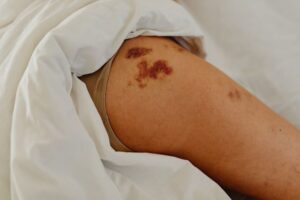
Seromas are one of the most common complications that occur following surgery. In some patients they can resolve on their own, but in other cases intervention by a plastic surgeon may be necessary. Here we will answer the common question what is a seroma and why does it occur, highlighting the importance of understanding everything about this condition, especially if you are about to undergo an operation.
What is a seroma?
A seroma is the abnormal accumulation of fluid or liquid, called serum, under the skin following a surgical procedure. Seromas form, in most cases, in the area of the incision or in the area where tissue is removed during surgery.
Why does it occur? Causes of Seroma
Common surgical procedures
A seroma can occur during minor surgery, but it generally occurs in extensive surgeries that affect a large amount of tissue.
Normally the surgeon places drains around the incision to prevent the appearance of seromas; however, this does not occur in all patients, and it is possible that one or two weeks after surgery liquid begins to accumulate in the surgical area.
Some of the surgical procedures in which seromas can form include:
- Surgeries to improve body contour, such as liposuction or arm, breast, buttock, or thigh lifts.
- Breast augmentation or reduction surgery.
- Hernia repair surgery.
- Abdominal surgery or Abdominoplasty.
- Cesarean section.
Associated risk factors
There are some aspects that can increase the likelihood of developing seromas, although not necessarily in all patients will these factors indicate that a seroma will occur. Among them:
- Extensive surgeries. Seromas are among the irregularities that can occur following liposuction.
- Surgeries involving a large amount of tissue.
- Patients with a history of seromas following other aesthetic surgeries.
Seroma Symptoms
Initial signs and symptoms
Generally, a seroma appears as a cyst or bulge that forms under the skin near the surgical incision. This can cause pain and skin tenderness.
Seromas can cause clear or yellowish secretions, but we must distinguish this fluid from the thick, foul-smelling liquid that occurs when there is an infection. Additionally, the skin surrounding the seroma may feel warm to the touch.
Potential complications
A seroma can drain liquid to the surface. If it is thick, foul-smelling liquid that changes color, this is a sign that an abscess has formed and in these cases medical attention is required, since it will not disappear on its own and may increase in size.
An infection must be treated immediately, as if it spreads to the blood, sepsis or another serious illness can develop.
When should a seroma be a cause for concern?
Initially, seromas may appear as small, soft lumps with mild symptoms such as a feeling of tightness and pressure. At this stage they can be reabsorbed by the body.
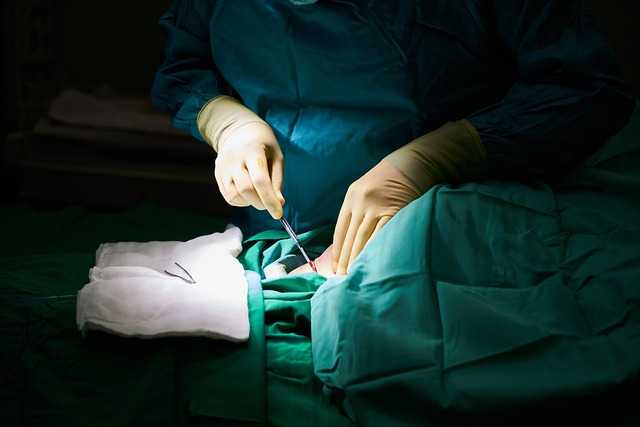
But if the seroma increases in size and presents other symptoms such as discoloration, fever, sharp pain, changes in the color and consistency of the fluid, bleeding or opening of the wound, you must see your surgeon immediately. Under no circumstances should you try to drain it at home by pressing or puncturing it, as that could complicate the case even further.
Seroma Diagnosis
Diagnostic methods
Through a postoperative physical examination, observation and exploration of the affected area by the surgeon, the presence of a seroma can be determined.
In some patients an ultrasound may be required to determine if there is fluid accumulation under the skin, as well as the size and location of the seroma.
Differentiation from other post-surgical problems
Seromas can be differentiated from other post-surgical problems such as infections and hematomas by the characteristics that each one presents.
In seromas, the fluid is clear in color and watery in consistency, while hematomas are filled with blood and infection occurs by accumulation of pus.
With regard to pain, appearance, and swelling:
- Seromas generally cause mild pain, hematomas moderate pain, and infection intense pain.
- The seroma appears slightly reddened, while the hematoma and infection do show greater redness.
- As for swelling, that of the seroma is soft and fluctuant; in the hematoma it is firmer; and in the infection it can be soft, but very evident.
Seroma Treatment
Non-invasive treatment options
When seromas are small, it is very likely that they will not require any treatment, as the body usually reabsorbs these fluids naturally. In case of swelling, discomfort, and pain, the doctor may prescribe over-the-counter pain relievers.
If the seroma is larger and causes significant pain, the doctor may drain it using needle aspiration.
Surgical interventions
If the seroma refills after drainage, it is very likely that the surgeon will recommend complete removal through a minor surgical procedure.
How is a seroma drained?
The method used to drain a seroma will depend on its size and characteristics; the specialist will use one of the following:
- Lymphatic drainage massage: used in the early stages, with the aim of directing the fluid towards the lymphatic channels through massage so that the body can take it up or eliminate it naturally.
- Needle aspiration: this is the most common method; the specialist disinfects the area, inserts a syringe and begins the process of extracting the fluid. It is generally painless and may require more than one session.
- Temporary surgical drainage: if the seroma does not disappear with the methods above, the specialist may decide to place a temporary drain. A small incision is made in the wound and a flexible tube is inserted, through which the fluid will drain into a bag placed in the area.
Seroma Prevention
Preoperative measures
Choosing an experienced and qualified surgeon is one of the most important prior measures to consider before surgery. A physician with sufficient experience will ensure taking all necessary measures to avoid complications such as seromas, although we know that any surgery carries some level of risk.
Postoperative care
To avoid complications following an abdominoplasty or any other surgery, and to prevent a seroma from forming during the postoperative period, it is important to follow your surgeon’s instructions to the letter. Avoiding strenuous physical activity until authorized is essential for proper recovery.
The surgeon may recommend the placement of surgical drainage systems. Additionally, the use of compression garments helps reduce swelling and bruising resulting from surgery. All of this can be effective in reducing the likelihood of developing a seroma.
Prevention according to the type of surgery
Preventing the formation of a seroma depends on the type of surgery and on the technique the surgeon uses. This is because the more dead space that is created and the greater the damage to the lymphatic vessels, as in an abdominoplasty, the higher the risk will be.
There are surgical procedures with a higher risk of seroma formation. To prevent a seroma from appearing after a liposuction or liposculpture, it is essential that the patient follows the post-operative treatment, such as wearing compression or post-surgical garments 24 hours a day for a month, or as indicated by the surgeon.
Frequently asked questions
How long does a seroma take to be reabsorbed?
A small seroma takes between 2 and 4 weeks to be absorbed naturally.
Is draining a seroma painful?
No, draining a seroma is generally not painful; the patient may feel slight discomfort when the needle is inserted, and will then feel relief as the fluid is extracted.
Can it fill up again after being drained?
Yes, more than one drainage session is usually needed for the seroma to disappear completely.
How can you tell if a seroma is infected?
To tell whether a seroma is infected, watch for changes in the color of the skin, whether there is pain, whether the appearance of the fluid has changed, and other symptoms such as general malaise and fever.
Conclusion
When undergoing any surgery that affects a significant amount of tissue, there is the possibility that a seroma may develop. In this article you have been able to learn what a seroma is and why it occurs, information that is essential to know before undergoing an abdominoplasty or any other invasive surgical procedure.
Choosing the right surgeon and following their pre-operative and post-operative instructions can reduce the risks of seroma development. Remember that if you experience any symptoms, it is essential to seek medical attention immediately to avoid possible complications.