Posted by Dr. Miguel Fernández Calderón: 16/10/2026
Carboxytherapy is a non-surgical aesthetic treatment by means of which carbon dioxide is injected into the body with the aim of combating cellulite, improving skin laxity, reducing the appearance of stretch marks and reducing localized fat. The patient can achieve smoother, softer, firmer and more oxygenated skin.
The indicative price of this treatment is between €35 and €90 per session; among the factors that influence this calculation are the area to be treated, the clinic selected and the reputation of the specialist.
What is carboxytherapy?
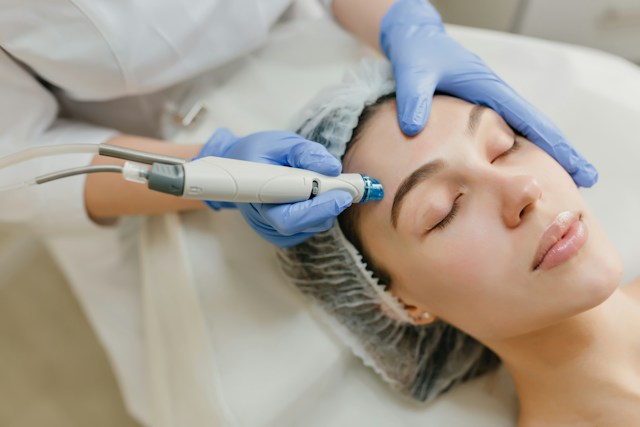
Carboxytherapy is a minimally invasive medical and aesthetic treatment that consists of the infiltration of carbon dioxide (CO₂) into the body by means of subcutaneous or intradermal microinjections, which are applied directly to the area that you want to improve, stimulating the oxygenation of tissues and improving blood circulation.
This technique is generally used in aesthetic medicine for the reduction of cellulite and localized fat and to improve skin laxity. Likewise, it is used to attenuate the appearance of stretch marks and improve facial wrinkles and dark circles.
How does it work?
In carboxytherapy, when CO₂ is injected into the body and comes into contact with tissues, a series of physiological reactions occur immediately, such as: increased oxygenation to the surrounding cells and tissues, increased blood flow.
While in the medium term there is formation of new blood capillaries, thus improving irrigation and cellular nutrition. Likewise, it generates stimulation of fibroblasts, which are the cells responsible for producing collagen and elastin in the body, restoring firmness, elasticity and rejuvenation to the tissues. In addition, it improves the functioning of the lymphatic system reducing fluid retention and promotes the reduction of localized fat once the gas breaks down the adipocytes.
What is it used for?
With the administration of carbon dioxide into the body, the aim is to improve the appearance of the skin; it is used to treat:
- Cellulite: disintegrates fat cells, improves blood microcirculation and reduces fluid retention, significantly improving the appearance of cellulite on the skin.
- Skin laxity: by stimulating the production of collagen and elastin, two vital components for maintaining healthy skin, it helps improve the texture, firmness and elasticity of the skin.
- Stretch marks: by increasing blood irrigation and collagen production, the gas improves the appearance of stretch marks, which generally acquire a color and texture similar to the surrounding skin.
- Localized fat: increased oxygenation, improved metabolism and the pressure exerted by CO₂ cause the rupture of fat cells, which helps reduce the amount of localized fat.
- Dark circles and bags: when applied to the lower eyelid, it improves circulation and helps attenuate the dark pigmentation of the area. It can also be combined with under-eye filler with hyaluronic acid for a more complete result.
Carboxytherapy, mesotherapy or cavitation: which to choose
These three procedures, although they have elements in common, are very different. The choice of one of them will depend on the objective you want to achieve.
By means of cavitation the membrane of fat cells is broken and they are eliminated through the lymphatic system, reducing measurements in the thighs, hips and flanks. On the other hand, carboxytherapy offers greater skin firmness, improves the appearance of stretch marks and stimulates collagen production. Mesotherapy is applied in small areas, reduces cellulite, provides deep hydration and firms the skin.
| Criterion | Carboxytherapy | Mesotherapy | Cavitation |
| What does the procedure consist of? | Infiltration of carbon dioxide through microneedles in order to stimulate blood circulation, oxygenate tissues and promote lipolysis. | Placement of microinjections directly in the area to be treated to supply vitamins, minerals and lipolytics. | Application of low-frequency ultrasound waves externally, generating microbubbles in fatty tissue, causing it to collapse. |
| When is the treatment recommended? | Cellulite, skin laxity, localized fat, stretch marks and scars, dark circles and facial rejuvenation. | Soft cellulite, mild or moderate localized fat, skin laxity, alopecia, fluid retention. | Localized and stubborn fat (abdomen, saddlebags, flanks and thighs). Fibrous and hard cellulite, remodeling and body contouring. |
| Level of invasiveness | Minimally invasive, subcutaneous or intradermal microinjections are used, may cause mild discomfort. | Minimally invasive, microinjections are used that may cause redness, bruising and mild pain. | Non-invasive, external procedure, does not cause pain. A slight warmth is felt. |
| Average number of sessions | 6-12 | 4-10 | 6-12 |
| Limitations and contraindications | Pregnancy and breastfeeding, decompensated heart disease, uncontrolled high blood pressure, respiratory insufficiency or COPD, renal insufficiency, venous thrombosis or thrombophlebitis, coagulation disorders, severe anemia, epilepsy and active infections. | Allergic reaction to injected components, coagulation problems, active infections, pregnancy and breastfeeding. | Pregnancy, hepatic and renal insufficiency, pacemakers, nearby metal prostheses, hypercholesterolemia. |
How many sessions are needed and when are results noticed?
In carboxytherapy, the specialist, after medical evaluation, will determine the number of sessions that the patient requires. This will depend on the area to be treated and its condition, since it is a personalized treatment.
On average, a patient may require between 6 and 12 sessions and, depending on each patient’s response, they could see the first results from the third or fourth session.
One of the most requested treatments is carboxytherapy to treat cellulite; on average, between 6 and 10 sessions are needed, while to treat localized fat and skin laxity it would be approximately 8 to 12 sessions.
Contraindications and side effects
Carboxytherapy, a minimally invasive treatment, has side effects that are generally very mild and tolerable for the patient. Among the most common discomforts are: crepitus or subcutaneous emphysema (sensation of “crackling” under the skin), sensation of pain or burning in the puncture area, redness due to vasodilation, bruising and temporary swelling.
Likewise, it is important to note that not all patients are suitable for this type of procedure. The evaluation of health conditions will be carried out by the specialist during consultation, and will not recommend the treatment if the patient has any condition that compromises their health.
It is contraindicated in pregnant women or those breastfeeding and in people with decompensated heart disease, uncontrolled high blood pressure, respiratory insufficiency or COPD, renal insufficiency, deep venous thrombosis or thrombophlebitis, coagulation disorders or severe anemia. It is also not recommended in patients with epilepsy, recent stroke history or those undergoing acetazolamide treatment, nor when there is fever or an active infection, either in the area to be treated or generalized.
If you require an online evaluation or in-person consultation with specialized surgeons to determine whether you are a suitable patient for the treatment, contact us.
When it is not enough: the surgical alternative
The surgical alternative is evaluated when non-invasive aesthetic procedures have not given the expected results, since these have limits in their correction capacity. It may also be the case that the patient has a chronic condition in the area to be treated and requires other types of treatments.
For example, if you have severe skin laxity, in that case the patient has a large amount of loose skin that can be removed with an abdominoplasty, brachioplasty or cruroplasty.
In the case of moderate to high fat accumulation, a liposuction or liposculpture is evaluated and, in the case of advanced cellulite, subcision can be used or a fat transfer can be performed to fill the depressions in the skin.
Frequently asked questions
Does carboxytherapy hurt?
No, it is generally not a painful technique, the patient may feel mild discomfort, but it all depends on each person’s sensitivity. When the gas is introduced, a sensation of tingling, tickling, pressure may occur and bruising may appear that disappears in a few days. Serious complications are not common, hence the importance of undergoing treatment with a qualified specialist.
Who cannot have carboxytherapy?
As an aesthetic treatment, carboxytherapy requires a prior medical evaluation to determine if the patient is suitable. It is not recommended during pregnancy or breastfeeding, nor in people with uncompensated heart disease, uncontrolled high blood pressure, respiratory or renal insufficiency, venous thrombosis, clotting disorders, severe anemia or epilepsy. It should not be applied if there is fever or an active infection.
Does carboxytherapy have a rebound effect?
In the results of carboxytherapy, a rebound effect as such is not described, but it can happen that the results obtained are affected if the patient does not maintain a healthy lifestyle, healthy eating and does not perform maintenance sessions.
Can you exercise or bathe after a session?
It is not recommended to exercise after a carboxytherapy session; you should wait between 24 and 48 hours for your body to absorb the gas. With regard to bathing, you can bathe with lukewarm water, not hot, as it can increase inflammation. For greater safety, the most recommended thing is to follow the instructions given by the specialist who performs the treatment for you.
References
- Sanitas: https://www.sanitas.es/biblioteca-de-salud/estetica/tratamientos-y-aparatologia/carboxiterapia
- Seme: https://www.seme.org/revista/articulos/efectos-adversos-de-la-carboxiterapia-a-proposito-de-un-caso