Posted by Dr. Miguel Fernández Calderón: 15/10/2025
If someone asks you what is a person’s normal body temperature, you would probably answer 37°C, because that’s what has always been taught and studied. However, the studies indicating that value date back many years, and over time, new research has determined that this average temperature has actually decreased. Keep reading as we provide you with updated information on this topic.
What is a person’s normal body temperature?
Range generally accepted by medical standards
A person’s body temperature can vary according to factors we will discuss later in this article; however, a normal body temperature is considered to be between 35.95 and 37.32 degrees Celsius, with an average of 36.64 degrees Celsius.
Differences between core and peripheral body temperature
Core or internal body temperature is the temperature of the internal organs and central nervous system. This is estimated to remain in a range between 36.5 and 37.5 degrees Celsius, while peripheral temperature is the surface temperature on the outermost layer of the body.
Factors that influence body temperature
Age and gender
Studies have indicated that body temperature is higher in women than in men and decreases with age. In women, the menstrual cycle can be responsible for changes in body temperature.
Time of day and circadian rhythm
Body temperature in the morning is usually lower and can increase throughout the day, reaching its highest point in the late afternoon hours.
The body associates darkness with sleep and rest, which causes body temperature to decrease, while during daylight hours, to stay alert, temperature tends to rise.
Physical activity and emotional state
The difference in weight between men and women also influences body temperature. In general, men have greater muscle mass. Additionally, physical exercise increases heat production in the muscles.
Regarding emotions, states of extreme stress and anxiety are also factors that can raise body temperature.
Type of measurement
Depending on the method used to take body temperature, it can vary by a few tenths of a degree. Rectal measurement is the most accurate for determining core temperature. On the other hand, the oral thermometer is the most common and very reliable method, although it can vary due to breathing and food intake.
Axillary measurement is widely used but less accurate, and can have a margin of error between 0.3 and 0.6 degrees Celsius compared to an oral thermometer. Finally, tympanic measurement is less reliable, as earwax and measurement technique can influence the reading.
When is it considered fever or hypothermia?
Body temperature can vary from person to person due to the factors we mentioned earlier. However, the following information can be used as a reference.
Elevated temperature: from low-grade fever to high fever
Low-grade fever is considered a temperature between 37 and 37.7 degrees Celsius, or even up to 38°C. From this last temperature onward, it is considered fever.
High fever is defined as a temperature exceeding 39.4°C. During recovery following a BBL, your body temperature may vary, but if it rises above the levels indicated here, you should seek immediate medical attention.
Low temperature: hypothermia and its levels
Hypothermia is determined by a body temperature value below what is considered normal. A person with a temperature below 35°C is considered hypothermic, although there are three degrees of hypothermia.
Mild hypothermia ranges from 35°C to 32°C, moderate hypothermia is between 32°C and 28°C, and severe hypothermia is below 28°C.
Low body temperature by itself is not a health problem; however, if accompanied by other symptoms such as chills, shivering, confusion, or difficulty breathing, it may indicate a more serious condition.
Situations requiring urgent medical attention
A patient with high fever, exceeding 39.4°C and presenting symptoms such as confusion, difficulty speaking or breathing, vomiting, seizures, neck stiffness, abdominal pain, and absence of sweating, requires immediate medical attention. A temperature above 40.0°C is considered hyperpyrexia.
If you have undergone an abdominoplasty, you should monitor your body temperature closely.
On the other hand, if a patient has low body temperature, hypothermia, accompanied by severe chills, confusion, loss of coordination, difficulty speaking, and pallor, they should also seek medical attention.
Normal variations and when to worry
It is normal for temperature to vary depending on the time of day when the measurement is taken, as we mentioned earlier. Additionally, if physical activity has been performed, or if women are in their menstrual cycle, changes in temperature should not cause concern if they are not accompanied by other symptoms.
However, if you develop a fever following breast augmentation, you should consult with your surgeon immediately.
Types of thermometers and how to measure correctly
The main types of thermometers are:
- Digital thermometer.
- Digital ear thermometer.
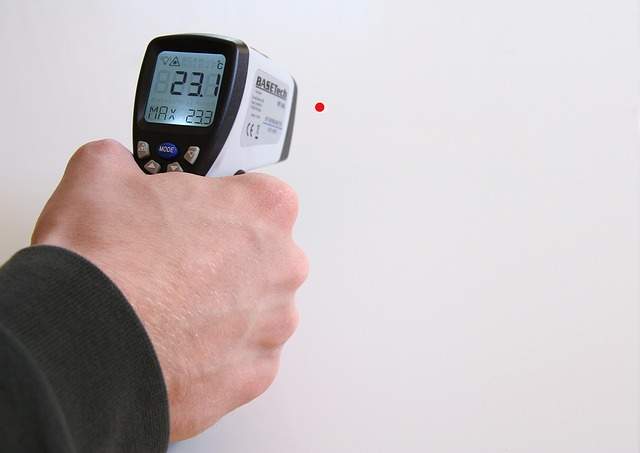
- Infrared Thermometer.
- Gun Thermometer.
- Glass Thermometer (Mercury or Galinstan).
Which is the most reliable? Comparison
The thermometers that offer the most reliable measurements are infrared and gun thermometers, which is a variation of the latter. Their results are highly accurate. Next would be digital ear and digital thermometers which, although precise, are not as accurate as infrared ones.
As for glass thermometers, they are accurate, but their use is not recommended because their contents are considered toxic.
Steps for accurate measurement at home
Rectal thermometers are recommended for babies under 3 months old and small children, and for use they should be lubricated at the tip and inserted very gently. Oral thermometers should be placed under the tongue, and when taking the measurement, breathe through your nose to ensure a more accurate reading.
The ear thermometer can be used from six months of age, and for better performance you should gently pull the ear up and back. To use the underarm method, make sure it is completely dry, position the thermometer so it touches the skin, and keep your arm firmly pressed against your body.
Infrared thermometers only require you to point the infrared light towards the forehead.
Summary: Listen to your body and act with good judgment
In general terms, normal body temperature ranges between 36.5 °C and 37.5 °C. Therefore, there is no single value for all people. This information serves as a guide, especially to help you understand that age, time of day, and even whether you are male or female can affect your temperature.
Remember that temperature changes, whether high or low, can indicate a problem, but in most cases they are accompanied by other symptoms. If you underwent gastric reduction surgery, this procedure involves a delicate postoperative period, and if you experience symptoms such as fever, contact your surgeon.