Posted by Dr. Miguel Fernández Calderón: 29/12/2025
If you want to sculpt your body and get rid of excess fat, cavitation may be the solution for you. It is a way to eliminate localized fat without surgery, a treatment that has gained popularity. Keep reading so you can decide if it is the right alternative for you.
What is cavitation and how does it transform your figure?
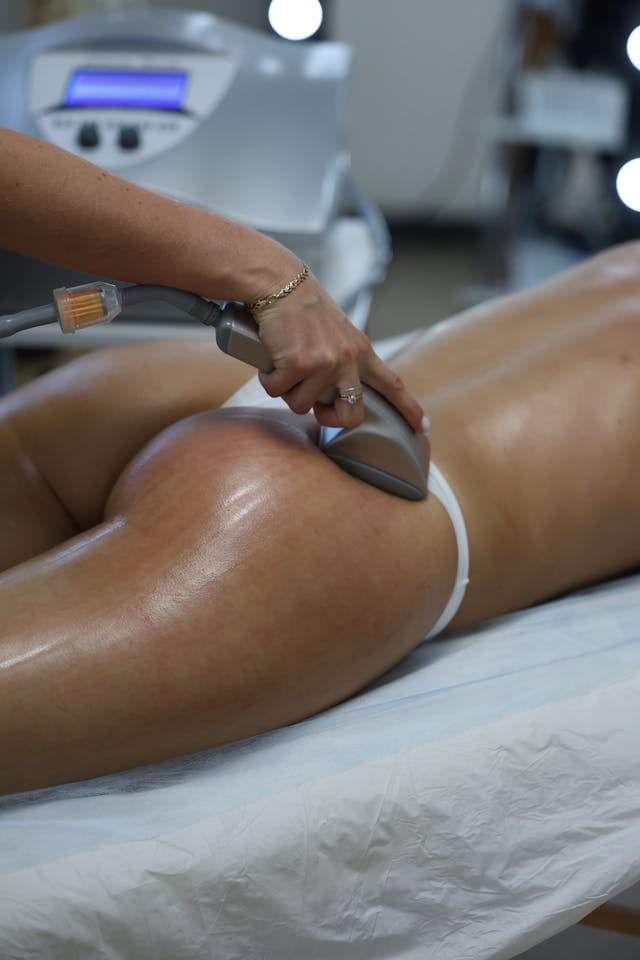
Cavitation is an aesthetic procedure that does not require surgery or invasive procedures. Instead, it uses a handheld device that applies low-frequency ultrasonic waves to destroy localized fat deposits, helping to reduce body volume.
This method allows ultrasound waves to penetrate the subcutaneous layers of fatty tissue, and aims to create small gas bubbles that increase in size and then burst inside fat cells, causing their rupture, which is what is known as cavitation.
With this process, the body naturally eliminates fat through the lymphatic system and urinary system.
Key differences between cavitation, ultracavitation and liposuction
Cavitation is a non-invasive procedure that, through low-frequency waves, eliminates localized fat. Ultracavitation is similar, but is a more advanced and powerful technique that removes deeper fat deposits. Similar to hydrolipoclasia.
Whereas liposuction is surgery that involves incisions, anesthesia, recovery time, and greater risks.
Real benefits: What can you expect from this treatment?
The main benefit of aesthetic cavitation is that it allows you to eliminate fat effectively, without the need for invasive, painful and in many cases risky procedures. In addition to this, cavitation offers the following advantages:
- Helps improve blood circulation.
- Allows elimination of accumulated toxins and fluids.
- By eliminating fat, the person achieves firmer and more toned skin.
- Reduces body contour.
- Improves and regulates intestinal transit.
- Reduces the appearance of cellulite and improves the appearance of orange-peel skin.
- Activates collagen production.
The procedure step by step: What is a professional session like?
To begin the procedure, the specialist must request blood tests to assess the patient’s health status. Once this is determined, the treatment can be planned and the number of sessions needed can be established.
An expert professional performs the procedure, applying ultrasound waves to dissolve the fat inside the cell, which will then be eliminated through the lymphatic system or urine.
Duration and recommended frequency
To achieve successful results, which can be very similar to those of microaire liposuction, it is recommended to undergo several sessions. The amount can range between 6 and 12 sessions, depending on the treated area and the amount of accumulated fat. Each cavitation session generally lasts between 40 and 60 minutes.
Cavitation sessions should be performed at least 72 hours apart, although the most common is once a week. Only in some patients can two per week be recommended, but when it comes to shorter sessions.
Why is pressotherapy the mandatory complement after cavitation?
It is recommended, after each cavitation session, to undergo some type of massage, lymphatic drainage, or pressotherapy, which serves to facilitate the elimination of fat cells and optimize results.
Cavitation pricing
The price range for cavitation per session is between €60 and €90. On average, between 6 and 12 sessions are required, depending on the area to be treated and the localized fat deposits.
If you choose to purchase sessions in packages or vouchers offered by some aesthetic centers, this price could be lower.
Factors that influence price
As with most aesthetic medicine procedures, there are factors that directly influence the cost of treatments. In the case of cavitation, the most common are: the size of the area to be treated and the amount of fat to dissolve, number of areas to be treated, reputation of the aesthetic center or clinic, recognition of the specialist, and the technology of the equipment to be used.
How long do cavitation results last?
The duration of the results obtained after cavitation will depend on your lifestyle habits, maintaining a balanced diet and a low-calorie diet. It is important to stay active by exercising and maintaining continuous hydration.
Clear results can be noticed between 6 and 12 weeks of treatment. And the result can last for months by following a good lifestyle, but it is not permanent.
A complete treatment is usually 8 to 12 sessions. And it is recommended to perform cavitation maintenance sessions every 4 to 6 months.
Contraindications and safety
Who should NOT undergo cavitation
This type of procedure is not recommended for patients with wounds, medical conditions or pathologies in the area to be treated. It also has contraindications for people with metal prostheses, pacemakers, skin sensitivity problems, blood clotting disorders, varicose veins, kidney problems or liver insufficiency.
Pregnant women or mothers in the breastfeeding period should not undergo this type of procedure.
Possible side effects and how to minimize them.
Cavitation is a procedure that does not cause pain, but rather some discomfort, such as tingling in the treated area, which in some patients can be felt more intensely than in others. During treatment, the person may experience a slight ringing in the ears, but there are no actual side effects.
Maximize your results: Pre and post-care protocol.
Pre-cavitation protocol
Before and after each cavitation session, it is recommended to drink at least one and a half to two liters of water, helping your body eliminate the broken fat cells resulting from cavitation.
In addition to maintaining adequate hydration, it is recommended that at least three days before the procedure you follow a low-calorie diet, eliminate fat and sugars, avoid alcohol, and reduce caffeine and salt consumption. You should keep your skin clean and free of creams and other substances.
Post-cavitation protocol
After the procedure, the patient should also follow some recommendations, similar to care after liposuction, such as maintaining a balanced diet accompanied by physical activity, so that fat is eliminated properly and does not reform.
After each cavitation session, it is essential to maintain hydration and immediately undergo lymphatic drainage massage or pressotherapy to help your body eliminate the dissolved fat.
Suspend alcohol consumption for at least 48 hours after treatment, continue with healthy and balanced nutrition, avoiding fats, sugar and flour, control salt and caffeine intake.
It is also a good option to continue with aerobic exercise for at least 40 minutes after the session to stimulate the burning of dissolved fat and accelerate metabolism.
Also, keep in mind that cavitation results can last between six months and a year if you maintain a healthy diet and lifestyle.
Conclusion: Is cavitation the ideal treatment for you?
In this guide you have been able to learn what cavitation treatment consists of and the advantages it offers.
So, if you are looking for a non-invasive and safe procedure that helps you reduce localized fat, improve cellulite and achieve better body contour, cavitation is presented as an excellent alternative, whose results become visible very quickly (after the third session).
But remember that, like any aesthetic procedure, it should be performed by a professional or specialist, like those you will find at our clinic.
Frequently asked questions
Is cavitation painful?
No, cavitation is a patient-friendly procedure, painless and non-invasive; it is performed with a device that transmits ultrasonic waves to dissolve fat and eliminate orange peel skin. It is also very helpful in recovery after undergoing an abdominoplasty to reduce inflammation and activate circulation.
When are results visible?
From the first session positive results can be observed; you will be able to appreciate the improvement in the treated area, but it is not until 6 to 12 weeks after the last session that the final result is appreciated.
What is the price?
The price varies depending on the number of sessions the patient requires; on average, it ranges from €60 to €90. It could increase if you combine it with other procedures such as radiofrequency.
Does cavitation help with weight loss or losing weight?
Cavitation is not a technique for weight loss or weight reduction. It is used for volume loss and body shaping, eliminating stubborn fat deposits and cellulite in people who generally maintain a stable weight.
What areas of the body can cavitation be applied to?
The areas of the body where the procedure can be applied are the hips and flanks, abdomen, knees, inner and outer thighs, arms and buttocks.
Can cavitation be combined with radiofrequency?
Yes, it is one of the most effective combinations. The heat produced by the electromagnetic waves of radiofrequency stimulates the production of collagen and elastin, which, combined with the fat elimination of cavitation, considerably improves skin appearance.
What happens if I don’t do pressotherapy or drainage after the session?
If you do not undergo pressotherapy massage or lymphatic drainage after cavitation, you run the risk of inflammation and reabsorption of fat, since your body does not eliminate the dissolved fat on its own.
References:
- Hedonai. Cavitation. https://www.hedonai.com/cavitacion
- Biotheface. Aesthetic cavitation. https://www.biotheface.com/single-post/cavitacionestetica
- Top Doctors México. What is cavitation and what are its benefits? https://www.topdoctors.mx/articulos-medicos/que-es-la-cavitacion-y-cuales-son-sus-beneficios
- Sanitas. Aesthetic treatments. https://www.sanitas.es/biblioteca-de-salud/estetica/tra
- Peluker. Cavitation and combination with other aesthetic treatments. https://www.peluker.com/blog/la-cavitacion-y-la-combinacion-con-otros-tratamientos-esteticos/