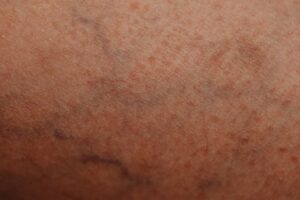
Posted by Dr. Miguel Fernández Calderón: 27/01/2026
Although it is a little-known condition, lipedema is a fatty tissue disease that causes a pathological increase in adipose cells, generally in the arms and legs, causing the size of the extremities to be disproportionate. On this occasion, we will discuss in more detail lipedema legs, symptoms, grades, and treatments; here you will find answers to all your questions.
What is lipedema in the legs?
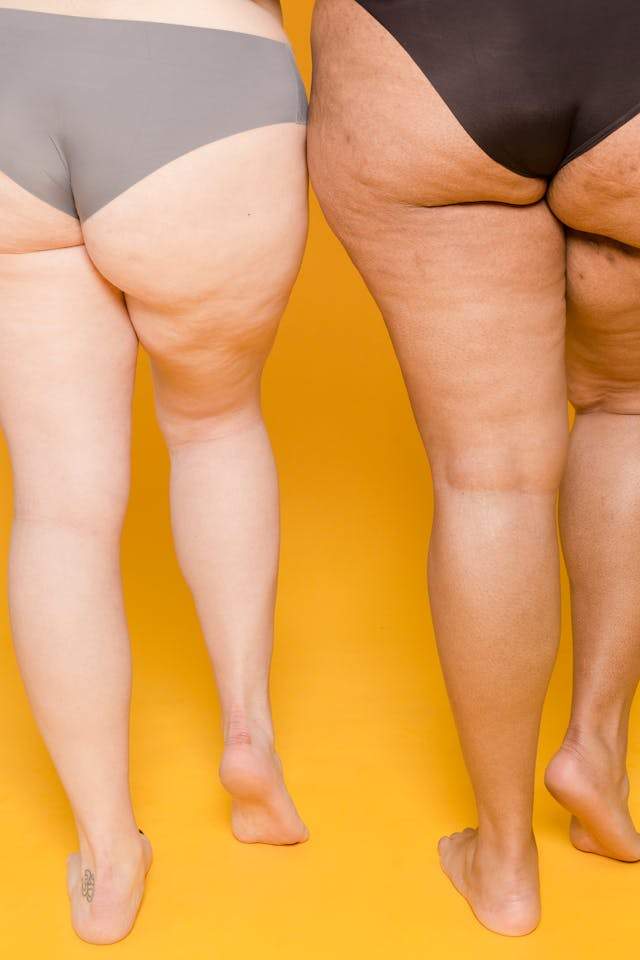
Lipedema is the abnormal accumulation of fat cells in certain areas of the body. In the specific case of leg lipedema, it is an excessive amount of fat in the legs (without affecting the ankles and feet), and consequently produces an exaggerated and unequal volume in this area of the body that, in turn, causes inflammation, intense pain, and sensation of heaviness.
Key differences between lipedema, obesity, and cellulite.
Although many may confuse these concepts, they are not the same and, therefore, treatments are different.
Lipedema, as we mentioned before, is a disease that causes pathological fat accumulation in an unequal manner, and causes pain and sensitivity. The condition does not improve with diet or exercise. As for obesity, fat forms and deposits generally throughout the body and, in some way, responds to eating habits and regular exercise.
On the other hand, cellulite is considered an aesthetic condition in which fat accumulates superficially in the thighs, buttocks, and abdomen, with an orange-peel appearance and without pain.
Why does it affect almost exclusively women?
The causes of lipedema are not precisely known, but studies have shown that it is an inflammatory and hormonal disease that occurs mostly in women from puberty onward and can also be inherited.
Lipedema is associated with hormones produced during different stages of women’s lives, such as puberty, pregnancy, or menopause. It can also appear or worsen with the use of birth control pills.
How to identify lipedema legs: Symptoms and physical signs
Anatomical disproportion: The “Cup Sign.”
Because fat accumulates in the legs but does not affect the ankles or feet, there is an abrupt cut between the voluminous volume of the ankle and the slenderness of the ankle, creating a shape that resembles an inverted cup.
Pain, hypersensitivity, and spontaneous bruising.
The accumulated fat resulting from lipedema has the characteristic that it causes intense pain, sensitivity to touch, and capillary fragility, which is why bruises appear frequently without reason.
Why are the feet not affected?
It is part of the particular characteristic of this condition in which fat accumulates abnormally and locally without affecting the ankle and foot.
Classification and Stages: From Grade I to Grade III
Grade I: Smooth skin with nodules.
Grade I lipedema is the stage in which, although the skin appears smooth, the skin feels thicker in the deeper layers, with small soft nodules, meaning they are not encapsulated.
Grade II: Orange peel and irregular surface.
When lipedema is grade II, the nodules are irregular, usually of various sizes, but are not encapsulated, although they feel firm.
Grade III: Deformity and large fat lobes.
A patient with grade III lipedema presents an advanced condition in which the fat nodules are larger, may even hang down, and make the leg appear deformed.
Lipedema Diagnosis: Which doctor should you see?
Because it is a little-known condition and is often confused with obesity or lymphedema, seeing a specialized physician is essential for an accurate diagnosis.
Diagnostic tests: Ultrasound and lymphoscintigraphy.
In addition to physical examinations and the patient’s medical history, some complementary tests are necessary to confirm the diagnosis. Among the most commonly used are ultrasounds and lymphoscintigraphy, methods used to assess the state of fatty tissue as well as the circulatory and lymphatic systems.
The problem of underdiagnosis in the public health system.
Despite being recognized as a chronic disease by the World Health Organization, the Spanish public system does not yet recognize it as such. Consequently, treatments are not covered by the public health system, representing a problem for patients, who must turn to private medicine to receive a timely diagnosis and appropriate treatment.
Effective treatments to eliminate diseased fat
Conservative treatment: Compression stockings and lymphatic drainage.
Compression stockings worn for periods between 12 and 16 hours daily offer positive results in relation to symptoms such as pain, heaviness, and sensitivity, but not in volume. Engaging in water sports, such as swimming, also improves these symptoms.
On the other hand, there is the option of manual lymphatic drainage, in which massages are performed to stimulate the lymphatic system to reduce the accumulation of fluid resulting from lipedema.
WAL Surgery (Water-Assisted Liposuction): The gold standard.
Surgery to treat lipedema in Madrid aims to eliminate pathological adipose tissue; however, because it is a type of fibrous and hard fat, traditional liposuction techniques are not effective and in some cases can be risky. The most recommended liposuction is WAL or water-assisted liposuction, which is a more precise technique that adapts to each patient’s needs.
Anti-inflammatory nutrition: RAD diet.
Adopting healthy habits and following a diet that is not only balanced but anti-inflammatory is an effective way to manage lipedema. This type of diet emphasizes the consumption of fresh, whole foods and high-quality proteins and reduces or eliminates ultra-processed foods, foods high in sugar, as well as dairy and gluten.
Postoperative period and results: What to expect after surgery?
Because water-assisted liposuction is a less invasive procedure than traditional liposuction, the side effects of the procedure (pain and bruising) are minimal and swelling decreases after the first 48 hours.
This type of treatment is effective in reducing pain, inflammation, and leg volume in the long term, which can be visible from 3 months onward.
Lipedema is a condition that occurs mostly in women; furthermore, there is a higher percentage of patients with lipedema legs compared to those who develop the condition in the arms, and in one-third of patients it can occur in both upper and lower extremities.
Although there is no cure, early detection can help you receive timely treatment and avoid complications. Therefore, we recommend that if you think you have lipedema symptoms, book your appointment at our clinic, as technology and medical advances can help manage the disease and improve the patient’s quality of life.
If you are considering surgical intervention, learn more about lipedema surgery and the results you can expect.
Sources:
- https://lipedema.es/que-es-lipedema/
- https://www.hospitalcima.es/es/especialidades-adultos-adultos-cirugia-plastica/lipedema.php