Posted by Dr. Miguel Fernández Calderón: 28/07/2026
Lipedema in the arms is the progressive accumulation of diseased fatty tissue located in the upper limbs; its symptoms include pain, heaviness, swelling, and orange peel skin. Unlike weight gain-related volume, it causes the appearance of bruises and is clearly differentiated from the wrist and fingers, which remain unaffected.
Effective treatments to manage it include the use of compression sleeves, lymphatic drainage, low-impact exercise, and liposuction.
What is lipedema in the arms?
Lipedema is the accumulation of fat that presents symmetrically, abnormally, and subcutaneously in the arms. It is a chronic and painful disease that affects fatty tissue, generally between the shoulder and elbow. This condition is often confused with overweight or obesity, and affects almost exclusively women.
Difference between arm lipedema and fat from overweight
At first glance, lipedema in the arms and accumulated fat from overweight in that area can be confused, but medically and in terms of patient symptoms they are completely different. To learn to differentiate them, consider this:
- Arm lipedema appears due to hormonal or genetic factors; overweight fat originates from calorie consumption, metabolic factors, genetics, hormonal dysregulation, neurobiological factors, medications, stress, and the patient’s environment.
- Increased arm fat from lipedema is symmetric and does not affect the fingers or wrists; overweight fat is uniform, appearing throughout the arm and hands.
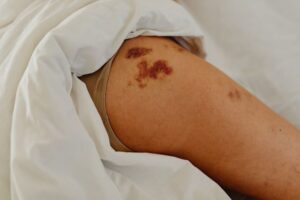
- Lipedema causes pain and bruises because the tissue is diseased. Overweight fat does not, because the tissue is healthy, painless, and no bruises form.
- Overweight fat is controlled and reduced by improving diet, reducing calorie intake, and exercising; lipedema, on the other hand, does not improve with these changes.
- To the touch, overweight fat is soft and homogeneous; conversely, lipedema fat presents nodules and orange peel skin.
Symptoms of lipedema in the arms
People with lipedema present the following symptoms: pain to the touch with minimal friction, heaviness and fatigue, appearance of bruises, mobility problems in very advanced cases, manifestation of nodules similar to grains of rice.
How to identify it: photos and visual signs
To identify lipedema in photos, it is necessary to pay attention to visually evident signs, such as the bracelet sign. This occurs when fat is concentrated between the shoulder and elbow; it does not affect the forearm, hands, or wrist.
The fatty tissue from lipedema is sagging; when stretching the arm to one side, fat can be observed on the back and lateral side of the arm. Another visual symptom is the appearance of micronodules; bulges and severe skin depressions are observed.
Causes: Why does it appear in the arms?
Lipedema appears in the arms due to genetic factors, hormonal, metabolic, or inflammatory problems. Its origin is biological, which means its appearance is beyond the patient’s control. It is a condition for which the body is genetically predisposed, and is programmed to produce diseased fatty tissue, specifically in the extremities, legs, and arms.

Treatment of lipedema in the arms
Although there is no definitive cure, the treatment to manage lipedema in the arms is selected by the lipedema specialist after assessment, as it will depend on the degree or level of the disease.
Conservative treatment
To manage the disease in its early stages or to relieve symptoms of lipedema in the arms, you may opt for conservative treatments, such as:
- Use of compression garments: the use of custom-made flat-knit sleeves is recommended. These sleeves exert considerable pressure to contain the tissue, stimulate the lymphatic system, and relieve heaviness and pain symptoms.
- Lymphatic drainage: a gentle massage performed to stimulate the lymphatic system and help evacuate accumulated fluid; this should be performed by a specialist.
- Exercise: low-impact exercises can be performed, such as swimming, as the movement of the upper limbs in this activity is very beneficial for patients with lipedema. Another recommended activity is yoga.
Surgery: specialized arm liposuction — before and after
Liposuction is a surgical procedure through which localized fat is extracted. As a treatment for lipedema, it serves to remove diseased adipose tissue. It is performed using innovative techniques such as WAL or PAL liposuction that use water and vibration to loosen tissue before suctioning it.
Before surgery, the patient’s quality of life is affected by this disease, sometimes even causing mobility problems in the arms. After surgery, this condition changes because pain and heaviness are notably reduced, mobility improves, and the appearance of bruises decreases.
In the aesthetic aspect there are also improvements: the wrist step disappears, there is a reduction in arm volume, and skin texture improves.
Frequently asked questions
How do I know if I have lipedema in the arms or simply accumulated fat?
You can differentiate whether you have lipedema or accumulated fat through self-assessment before consulting a specialist. If the fat in the arm extends to the wrist and does not affect it, or the fingers, if touching the arm hurts, small nodules are felt, and bruises appear, it is lipedema, not common fat. However, a surgeon is the one who can provide a correct diagnosis.
Can arm lipedema appear without affecting the legs?
Yes, lipedema can appear only in the arms, although it is not the most common; as time passes, there are many chances that it will also affect the legs.
What results can be expected before and after arm lipedema surgery?
We have already seen the symptoms and consequences of suffering from lipedema in the upper limbs. When undergoing arm liposuction as treatment, the patient will obtain very favorable results; pain practically disappears, there is a volume reduction, so aesthetically it will look better; the appearance of bruises will also diminish.
Get an accurate diagnosis
Today, advanced medical studies, the application of modern procedures, and cutting-edge technology allow patients to improve their quality of life and recover good health. If you need a professional medical assessment to determine if you have lipedema or just accumulated fat from weight gain, contact us.
Lipedema does not only affect the arms. Learn also how it manifests in the legs and consult our guide on legs with lipedema for more information.
References:
- https://www.mdsaude.com/es/dermatologia-es/que-es-lipedema
- https://www.tuasaude.com/es/lipedema/
- https://medizinonline.com/es/lipedema-un-trastorno-doloroso-del-tejido-graso-de-las-extremidades-en-las-mujeres-2